

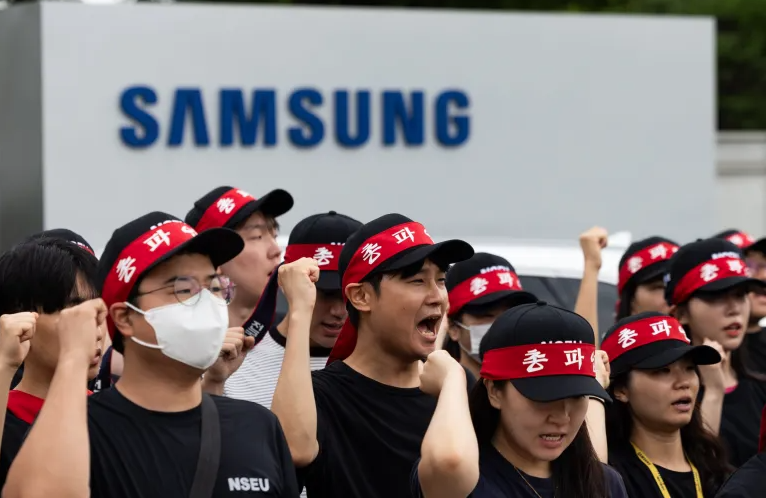
SEOUL (TechGenez) – Samsung Electronics and its largest labor union resumed government-mediated negotiations on Monday in a final attempt to prevent what would be the company’s largest-ever strike, scheduled to begin on Thursday.
The second round of post-mediation talks, facilitated by the National Labor Relations Commission (NLRC), opened at the government complex in Sejong as both sides face intense pressure from the government, business groups, and the courts to reach a compromise.
The dispute centers on how to share the windfall profits from the global AI boom, particularly in Samsung’s high-performing memory chip business.
Current Negotiations
NLRC Chairman Park Soo-geun said the talks would continue until 7 p.m. Monday and resume at 10 a.m. Tuesday. He noted that the morning session had only covered basic positions, with concrete proposals expected later in the day.
The union, led by Choi Seung-ho, has committed to engaging in good faith. Choi told reporters before the meeting that the union had come this far through mediation and would participate sincerely. Samsung’s negotiating team, including senior executives from the Device Solutions division, attended the session but made no immediate public comments.
Core Dispute
At the heart of the conflict is Samsung’s performance-based bonus system. The union is demanding greater transparency in bonus calculations, removal of the current incentive cap, and a written commitment to allocate 15% of operating profit to a bonus pool.
Samsung has resisted locking such terms into a fixed formula, stating it would provide competitive compensation if the company regains industry leadership.
Court and Government Pressure
The Suwon District Court partially granted Samsung’s request for an injunction on Monday, restricting the union from obstructing safety-related facilities, fire prevention systems, and work needed to prevent wafer deterioration or facility damage. The ruling also bans occupation of company premises and entry blockades.
Samsung emphasized in an internal notice that safety and security operations must continue at normal weekday levels during the strike. The union said it would respect the court’s decision but maintained that the injunction does not significantly hinder its planned action.
Labor Minister Kim Young-hoon has been actively involved, while President Lee Jae-myung urged both sides to reach a “wise” settlement that balances labor rights and management responsibilities. Business lobbies, including six major industry groups, jointly called on the union to cancel the strike, warning of serious risks to semiconductor exports and the national economy.
Potential Impact
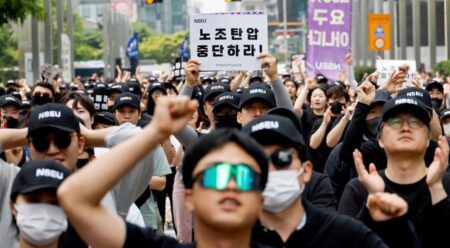
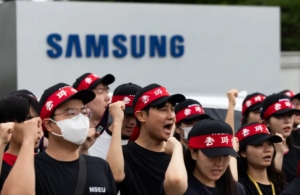
Approximately 50,000 workers are expected to participate in the 18-day strike from May 21 to June 7. A prolonged stoppage could disrupt production of advanced memory chips used in AI servers, smartphones, and other devices, with potential ripple effects on global supply chains.
The current mediation round is widely viewed as the last practical opportunity to avoid the strike. Failure to reach an agreement could lead to significant production losses at key facilities and further strain labor relations at South Korea’s largest company.
Both sides remain under heavy pressure to find common ground before Thursday’s deadline.
Conclusion
The high-stakes negotiations between Samsung Electronics and its union reflect deeper tensions over fair distribution of profits from the AI boom. With global supply chains at risk and significant economic stakes involved, the outcome of this week’s talks will have major implications for Samsung, its workers, and South Korea’s technology industry.