





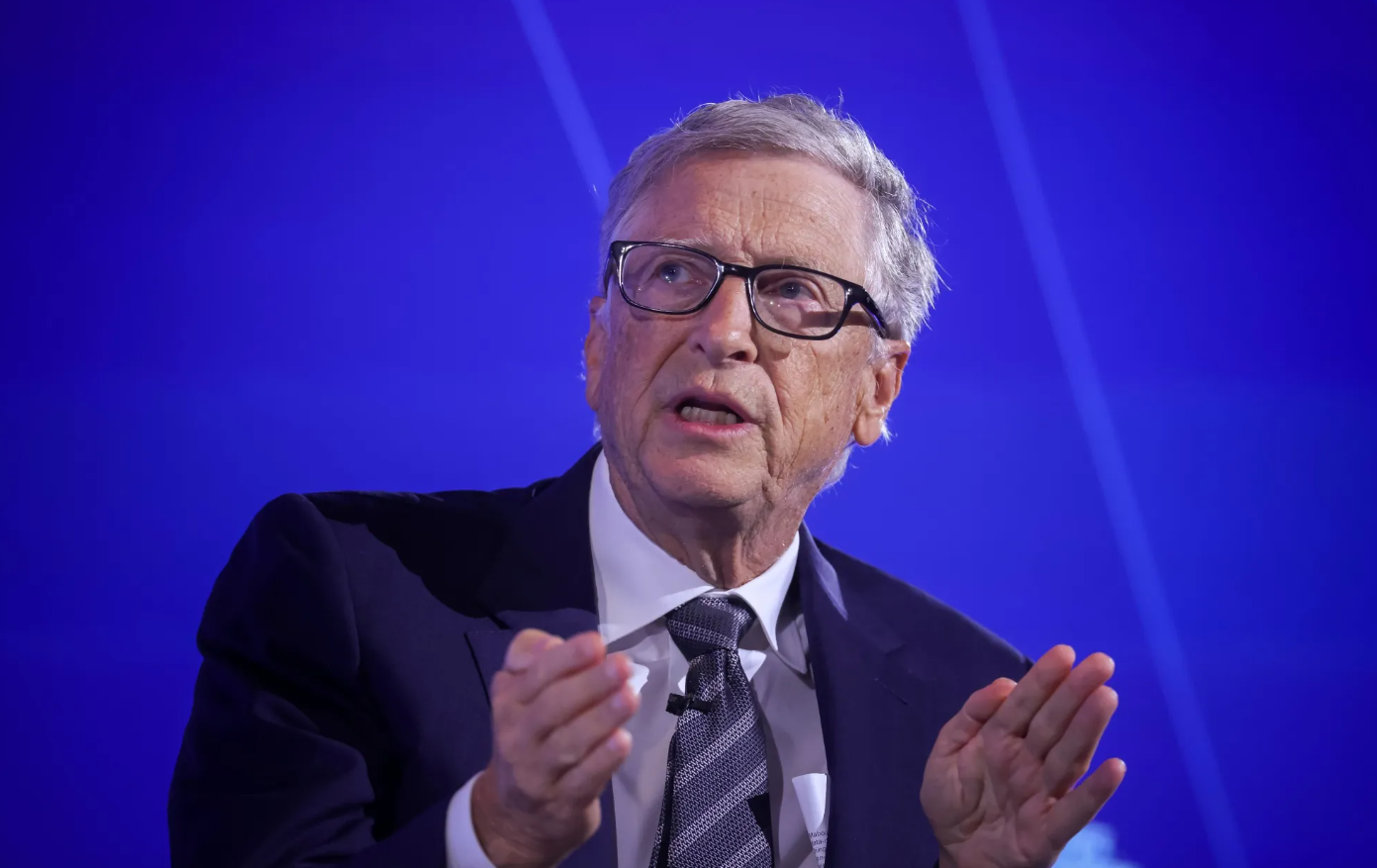
NEW DELHI – Bill Gates abruptly withdrew from India’s AI Impact Summit on Thursday, canceling his keynote address hours before it was scheduled, dealing another blow to an event already criticized for organisational failures, traffic disruptions, and a controversial robot demonstration.
The cancellation follows Nvidia CEO Jensen Huang’s last-minute pullout earlier in the week, leaving the six-day summit, billed as the Global South’s first major AI forum, facing mounting scrutiny despite securing more than $200 billion in investment pledges, including a $110 billion commitment from Reliance Industries announced Thursday.
Prime Minister Narendra Modi inaugurated the event alongside French President Emmanuel Macron, Google CEO Sundar Pichai, OpenAI CEO Sam Altman, and Anthropic CEO Dario Amodei, emphasizing child safety in AI platforms.
Event Highlights and Commitments
The summit attracted significant private-sector pledges:
- Reliance Industries announced a $110 billion investment in AI infrastructure.
- Tata Group signed a partnership with OpenAI.
- Additional commitments from global tech firms pushed total pledges above $200 billion.
Modi called for child safety measures: “We must be vigilant about children’s safety. Just as a school syllabus is curated, the AI space should also be child- and family-guided.”
The leaders posed for a widely circulated photo with raised arms, though an awkward moment occurred when Altman and Amodei stood side by side without joining hands.
Organisational Criticism
Attendees and media reported significant logistical issues:
- Severe traffic congestion around venues.
- Poor crowd management and registration delays.
- A robot demonstration that drew mixed reactions and technical glitches.
The Gates Foundation stated the withdrawal was “to ensure the focus remains on the AI Summit’s key priorities,” dismissing earlier rumors of his absence.
The cancellation follows the release of U.S. Department of Justice emails showing Gates Foundation staff communication with Jeffrey Epstein, though Gates has maintained the relationship was strictly philanthropic.
Broader Context
India has positioned itself as a leading voice in global AI governance, hosting the summit to attract investment and shape international standards.
The event’s high-profile absences and organisational challenges contrast with the substantial financial commitments, highlighting both opportunity and execution risks for India’s AI ambitions.
Challenges
- Logistical failures risk damaging India’s reputation as a reliable host for major tech events.
- The Gates withdrawal adds to perceptions of instability, especially given Huang’s earlier exit.
- Balancing rapid investment with effective governance and public safety remains a key test.
Conclusion
While organisational missteps and high-profile absences marred the opening days, India’s AI Impact Summit secured massive investment commitments, reinforcing the country’s growing role in the global AI landscape. The event’s ultimate success will depend on effective follow-through and improved execution in the days ahead.