




BEIJING – China has instructed its major tech companies, including ByteDance, Alibaba, and Tencent, to halt purchases of Nvidia’s H20 AI chips due to alleged national security concerns, according to reports from The Information and Reuters. The directive, issued by the Cyberspace Administration of China (CAC) in late July 2025, cites fears of “backdoors” and tracking technology in the U.S.-made chips, escalating tensions in the U.S.-China tech trade war, per Bloomberg.
This move, which follows U.S. approval for Nvidia to resume H20 sales, threatens Nvidia’s $20 billion annual China market and boosts domestic chipmakers like Huawei, per CNBC. As Nvidia halts H20 production and Chinese tech firms pivot to alternatives, the global semiconductor landscape faces a seismic shift.
The Directive: China’s Crackdown on Nvidia’s H20
On July 31, 2025, China’s CAC launched a security probe into Nvidia’s H20 chips, summoning the company to address concerns about potential “backdoors” that could allow remote access or control, per WinBuzzer. The H20, designed specifically for China to comply with U.S. export controls, became a focal point after Chinese regulators urged tech giants to suspend orders until the review’s completion, per The Information.
Reuters reported that Beijing sent informal “window guidance” to firms like ByteDance, Alibaba, Tencent, and Baidu, discouraging H20 use in government and national security projects, per. The CAC’s concerns stem from proposed U.S. legislation, the Chip Security Act, which would mandate security and location-verification features in advanced chips to prevent military misuse, per WinBuzzer.
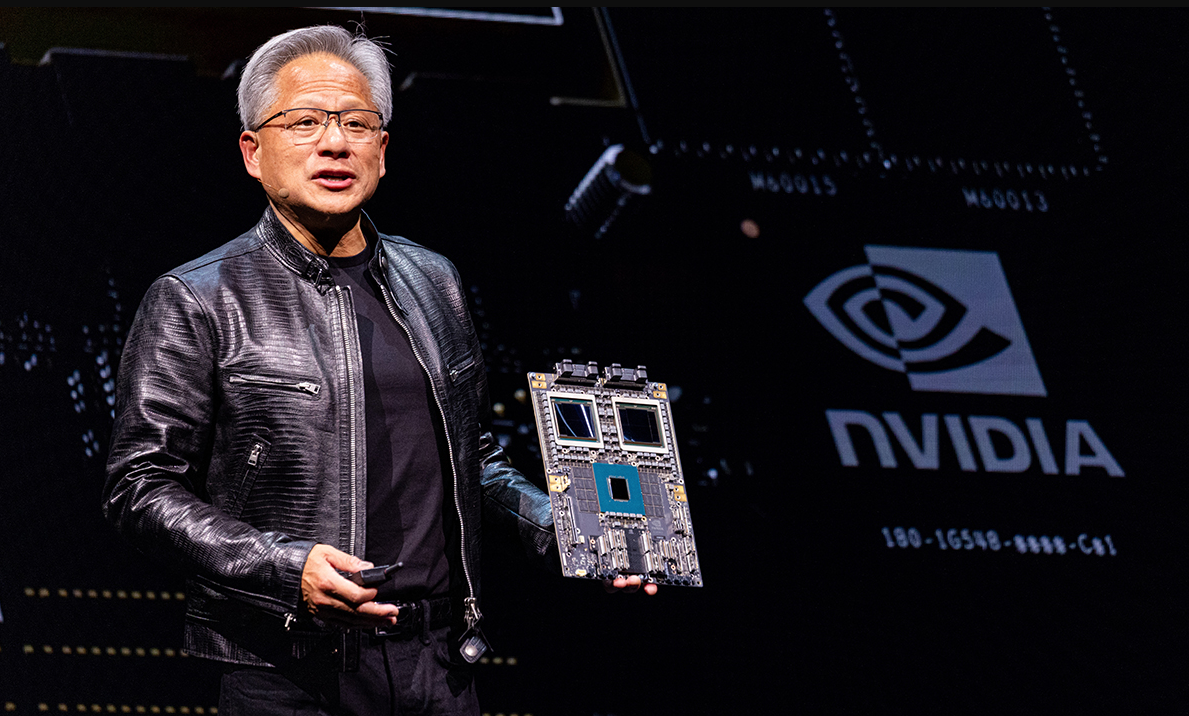
In response, Nvidia issued a statement denying backdoors, stating, “There are no backdoors, kill switches, or spyware in our chips. The market can use the H20 with confidence,” per Investopedia. CEO Jensen Huang, speaking in Taiwan on August 22, 2025, expressed surprise at the allegations, noting ongoing discussions with Chinese authorities, per Internewscast.
Nvidia’s Response: Halting H20 Production
Following China’s directive, Nvidia instructed key suppliers—Samsung Electronics, Amkor Technology, and Foxconn—to suspend H20 production, per The Information and Reuters. The H20, a less powerful chip tailored for China after U.S. restrictions on advanced AI chips in 2022, was a critical part of Nvidia’s strategy to maintain its 13% revenue share from China, valued at $17-$20 billion annually, per Business Standard. Nvidia reported a $4.5 billion writedown in Q1 2025 due to earlier export curbs, with sales potentially $2.5 billion higher without restrictions, per Internewscast.
Nvidia’s spokesperson told Investopedia, “We constantly manage our supply chain to address market conditions,” while Huang emphasized the H20’s non-military purpose, stating, “China won’t rely on American chips for government operations, just like the U.S. wouldn’t rely on Chinese chips,” per. However, the production halt has led to inventory pile-ups at Amkor and a reported $5.5 billion writedown, per Yahoo Finance.
U.S.-China Tech Tensions: A Geopolitical Chessboard
The ban follows a turbulent period in U.S.-China tech relations. In July 2025, the Trump administration reversed a ban on H20 sales, allowing Nvidia and AMD to resume exports with a condition: 15% of China-generated chip revenue goes to the U.S. government, per Investopedia. President Trump, who negotiated directly with Huang, called it a “great deal,” per WinBuzzer. However, U.S. Commerce Secretary Howard Lutnick’s July 2025 remarks—that China gets “fourth-best” U.S. technology—were deemed “insulting” by Chinese regulators, prompting the CAC’s probe, per Financial Times.
China’s push for tech self-sufficiency, accelerated by U.S. export controls since 2022, has fueled domestic chip development. Huawei’s Ascend AI accelerators have gained traction, filling the gap left by restricted Nvidia chips, per WinBuzzer. Chinese chipmaker Cambricon surged 20% in stock value after the H20 ban news, reflecting a shift toward homegrown alternatives, per Yahoo Finance.
Impact on Nvidia and the Global Market
The H20 ban threatens Nvidia’s $20 billion China market, a significant portion of its $120 billion annual revenue, per Internewscast. Nvidia’s stock fell 1.3% in pre-market trading on August 22, though it has gained 30% in 2025, per Investopedia. Analysts like Qingyuan Lin of Bernstein warned that a complete H20 ban could jeopardize Nvidia’s China sales entirely, though less advanced chips may still find buyers, per CNBC. Conversely, Charlie Chai of 86Research believes China won’t fully exclude Nvidia due to a lack of high-end alternatives, per WinBuzzer.
The ban has broader implications. Chinese tech giants, forced to pivot to domestic chips, may accelerate Beijing’s goal of semiconductor self-reliance, per Business Standard. Meanwhile, U.S. firms face challenges from Trump’s 100% tariff threats on imported chips, pushing companies like Intel to expand domestic production, per Alpha Spread.
China’s Push for Self-Sufficiency
Beijing’s actions align with its Made in China 2025 initiative, intensified by U.S. restrictions on advanced chipmaking equipment, per Business Standard. Huawei’s Ascend chips, while not yet matching Nvidia’s high-end offerings, are viable for many AI tasks, per WinBuzzer. Analyst Tilly Zhang of Gavekal Dragonomics noted, “Nvidia chips are now dispensable for China. They can be easily put on the negotiating table,” per WinBuzzer. China’s Ministry of Foreign Affairs called for U.S. cooperation to stabilize global chip supply chains, per Business Standard.
Nvidia’s Precarious Position
Nvidia is caught in a geopolitical bind, needing to prove the H20’s security to China while complying with U.S. export rules, per WinBuzzer. Huang’s diplomatic efforts, including discussions with Trump, underscore the challenge, with the CEO framing AI exports as critical for U.S. tech dominance, per Internewscast. Nvidia is reportedly developing a new chip, codenamed B30A, to replace the H20, but it requires U.S. approval, per Alpha Spread.
Conclusion
China’s directive to halt Nvidia H20 chip purchases, driven by security concerns, marks a significant escalation in the U.S.-China tech rivalry, threatening Nvidia’s $20 billion China market, per CNBC. As Beijing pushes for self-sufficiency with firms like Huawei, Nvidia’s production halt and inventory writedowns signal immediate financial strain, per Yahoo Finance.
The move, spurred by U.S. export policies and inflammatory remarks, underscores the fragile balance of global chip supply chains. With Chinese tech giants pivoting to domestic alternatives and Nvidia navigating a geopolitical tightrope, the semiconductor industry faces a pivotal moment in 2025, reshaping the future of AI and technology leadership.