




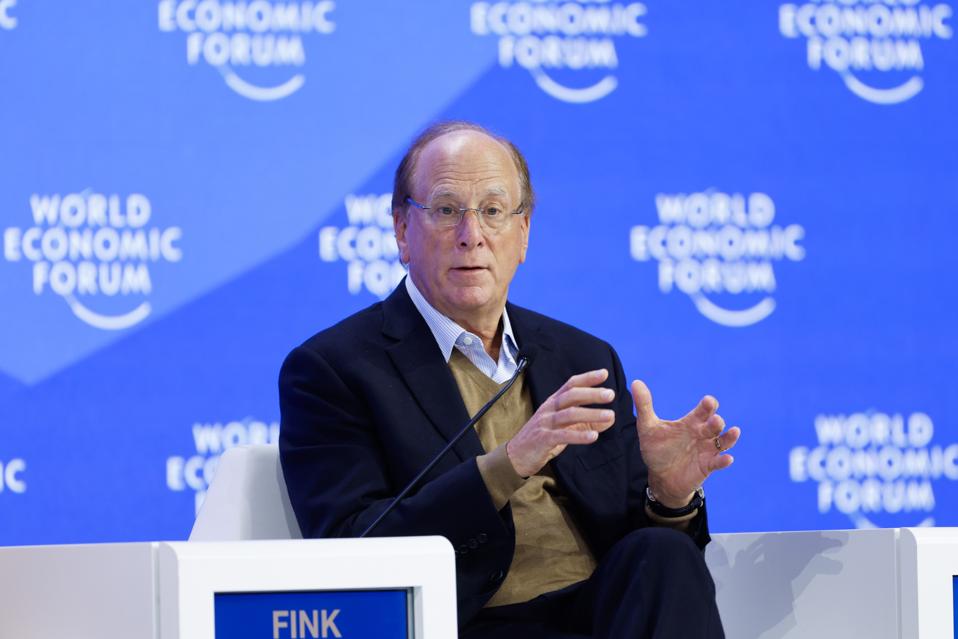
(TechGenez) – The explosive growth of artificial intelligence threatens to deepen global inequality by concentrating enormous financial rewards among a small group of companies and investors, BlackRock CEO Larry Fink warned in his annual letter to investors released Monday.
Fink, who oversees the world’s largest asset manager with $14 trillion under management, described AI as “central to strategic competition” between global powers such as the United States and China. While acknowledging the technology’s transformative potential, he cautioned that its benefits may disproportionately accrue to those already holding financial assets and dominant market positions.
“The massive wealth created over the past several generations flowed mostly to people who already owned financial assets,” Fink wrote. “And now AI threatens to repeat that pattern at an even larger scale.”
Fink’s Core Warning
The BlackRock chief executive pointed to the rapid rise of AI-focused companies as evidence of accelerating concentration. He noted that leading players with access to vast data sets, specialized infrastructure, and substantial capital “are positioned to benefit disproportionately.”
Fink highlighted Nvidia, whose market capitalization has reached $4.3 trillion, as a prime example of how AI leadership translates into outsized returns for shareholders. The chipmaker’s dominance in AI accelerators has made it the world’s most valuable public company, surpassing even Apple and Microsoft at various points in 2026.
The letter suggests that AI’s economic impact could mirror – and potentially exceed – previous technology waves that widened the gap between asset owners and wage earners. Fink expressed concern that without deliberate policy interventions, the technology could further erode the middle class and concentrate wealth at the top.
Broader Economic Implications
Fink’s comments arrive amid intense debate over AI’s societal effects. While the technology promises productivity gains across industries, critics argue it risks job displacement, wage suppression in certain sectors, and winner-take-most dynamics in markets.
The asset manager’s perspective carries significant weight: BlackRock’s influence extends to thousands of companies through its index funds and active strategies, giving Fink a platform to shape corporate and policy discussions.
He urged policymakers to consider measures that broaden AI’s benefits, such as education reform, workforce retraining, and policies that encourage wider capital ownership. However, he stopped short of endorsing specific proposals like universal basic income or wealth taxes.
Market and Industry Reaction
The letter did not immediately move markets significantly, with BlackRock shares little changed and major AI stocks holding steady. However, Fink’s remarks were widely circulated on financial media and social platforms, amplifying discussions about AI’s distributional consequences.
Analysts at Goldman Sachs and Morgan Stanley noted that Fink’s warning aligns with growing evidence of market concentration: the top five U.S. tech companies now represent more than 25% of the S&P 500’s total value, largely driven by AI enthusiasm.
Challenges and Counterarguments
Some industry leaders and economists counter that AI could democratize opportunity by lowering barriers to innovation and enabling new business models. They point to historical precedents where technologies initially concentrated wealth before creating broader prosperity.
Critics of Fink’s view also argue that BlackRock itself benefits enormously from the AI boom through its holdings in Nvidia, Microsoft, Alphabet, and other leaders, potentially creating a conflict when the firm’s CEO warns of inequality risks.
Outlook
- Fink’s annual letter has historically influenced corporate governance and policy debates. His focus on AI inequality follows previous calls for stakeholder capitalism, climate action, and long-term thinking.
- As AI investment continues to surge with global spending projected to exceed $300 billion in 2026 pressure will grow on governments and companies to address distributional effects.
- The letter signals that even major beneficiaries of the AI wave are beginning to grapple publicly with its potential to exacerbate wealth gaps.
Conclusion
Larry Fink’s stark warning that the AI boom could repeat and amplify historical patterns of wealth concentration arrives at a pivotal moment. As the technology reshapes economies and labor markets, the challenge for policymakers, companies, and investors will be ensuring that AI’s productivity gains translate into broadly shared prosperity rather than further entrenching inequality at an unprecedented scale.