




SAN FRANCISCO (TechGenez) – OpenAI is actively shaping a path toward a public stock offering that could establish its worth at as much as $1 trillion by the latter half of 2026, three individuals with knowledge of the initiative told Reuters, potentially creating one of the most monumental market debuts in history.
Initial conversations have focused on securing a minimum of $60 billion in funding, though the exact scale, schedule, and final valuation could shift depending on operational progress, investor sentiment, and regulatory approvals, the sources stressed.
The force behind ChatGPT, currently pegged at $157 billion after a $6.6 billion funding round in October 2024, is moving from private capital dependence to broad market participation. Microsoft, its anchor partner with over $13 billion committed since 2019, is poised to gain from the evolution.
OpenAI declined to comment.
Offering Structure
The anticipated listing would require confidential submissions to the U.S. Securities and Exchange Commission (SEC) as early as mid-2026, two sources indicated. OpenAI has enlisted top-tier banks such as Goldman Sachs, Morgan Stanley, and JPMorgan Chase to design the transaction.
Internal projections show 2025 revenue surpassing $5 billion, up from $1.6 billion in 2024, according to data shared with potential advisors. The influx of capital would fuel massive growth in computing capacity, including new data centers demanding billions in investment.
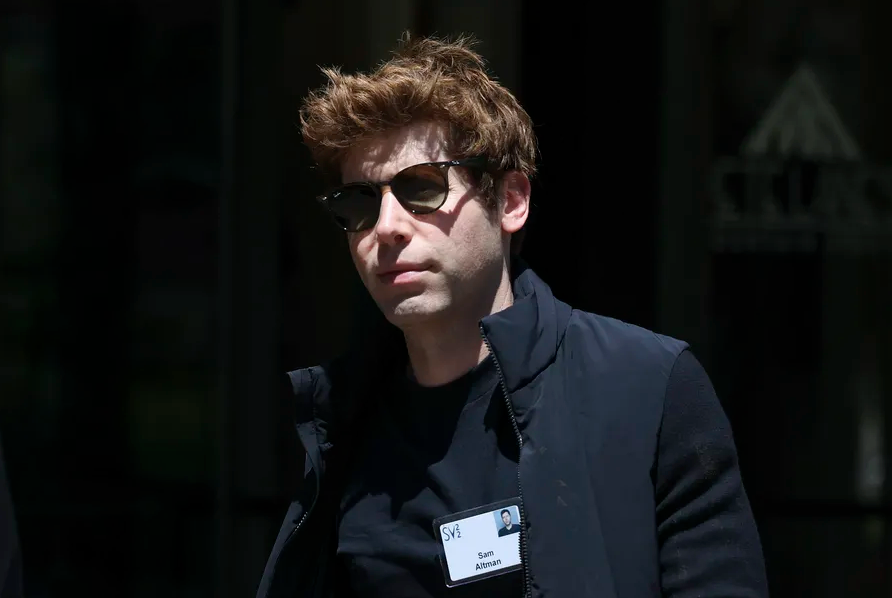
The debut is expected on Nasdaq under the symbol “OPEN,” with CEO Sam Altman likely maintaining voting control via a dual-class share setup, mirroring other major tech launches.
One source mentioned a direct listing as a viable alternative to a conventional underwritten offering.
Leadership Perspective
Sam Altman has alluded to public market goals in recent public appearances. During a September Bloomberg interview, he noted the company was assessing a listing to support its long-term vision for artificial general intelligence (AGI).
Microsoft, which embeds OpenAI technology in Azure, Bing, and Office tools, declined to comment. The tech titan holds a 49% interest in OpenAI’s commercial arm and has locked in cloud service agreements through 2030.
OpenAI’s earlier transition to a public benefit corporation (PBC) model removes structural barriers to public trading while safeguarding its founding commitment to advancing humanity through AI.
AI Sector Landscape
The prospective offering coincides with explosive growth in artificial intelligence, with global investment in the field reaching $100 billion in 2025, according to Crunchbase. OpenAI has attracted more than $20 billion in private backing since inception, with recent contributors including Thrive Capital, Khosla Ventures, and Sequoia Capital.
A $1 trillion valuation would eclipse Uber’s $82 billion 2019 debut and Saudi Aramco’s inflation-adjusted $1.7 trillion flotation, setting a new benchmark for capital market events.
Regulatory oversight is a key consideration: the EU’s AI Act mandates transparency for high-risk systems, while U.S. authorities continue reviewing Microsoft’s sway over OpenAI’s direction.
The company is expected to record a $5 billion loss in 2025 due to infrastructure outlays, underscoring the urgency for substantial external funding.
Market Response
Though OpenAI remains privately held, secondary market trades on platforms like Forge Global reflected a pre-announcement valuation near $480 billion.
Microsoft shares climbed 0.8% to $419.25 on Tuesday, helping lift the Nasdaq Composite by 0.6%.
Analysts reacted with enthusiasm. Daniel Ives of Wedbush Securities raised his internal OpenAI valuation target to $600 billion, pointing to momentum toward a public debut.
Hurdles Ahead
Reaching a $1 trillion market cap demands sustained expansion and a clear route to profitability. OpenAI must prove durable revenue beyond its flagship chatbot, now serving 200 million weekly active users.
Antitrust scrutiny presents risks: the Federal Trade Commission opened an investigation into Microsoft-OpenAI ties in 2024, which could affect listing clearance.
Keeping top talent is essential; OpenAI drew 20% of its staff from Google this year, per LinkedIn data.
Executive Views
Altman said in September: “We’re evaluating a public listing to power our mission, but responsible development is paramount.”
A source involved in planning stated: “This could become the largest offering ever recorded, but success hinges on market stability and regulatory alignment.”
Industry Dynamics
- Artificial intelligence firms are increasingly eyeing public markets. Anthropic filed confidential IPO documents in July 2025 aiming for a $50 billion valuation, while xAI is targeting a 2026 debut at $24 billion.
- Global AI investment hit $100 billion in 2025, dominated by infrastructure-focused deals.
- Microsoft reported $10 billion in Azure AI revenue for the third quarter, reflecting 30% growth.
- Emerging regulations, including the EU AI Act and U.S. executive directives, are shaping disclosure standards for future listings.
Forward Path
OpenAI plans to submit paperwork in the second half of 2026, with a possible market launch in early 2027 if conditions hold. Financial experts at Morgan Stanley project a $60 billion raise at a $1 trillion valuation, resulting in roughly 6% dilution for current investors.
The proceeds would accelerate the quest for artificial general intelligence, with Altman aiming for “safe superintelligence” by 2030.
As artificial intelligence redefines global industries, OpenAI’s public debut could herald a new chapter for technology giants.