




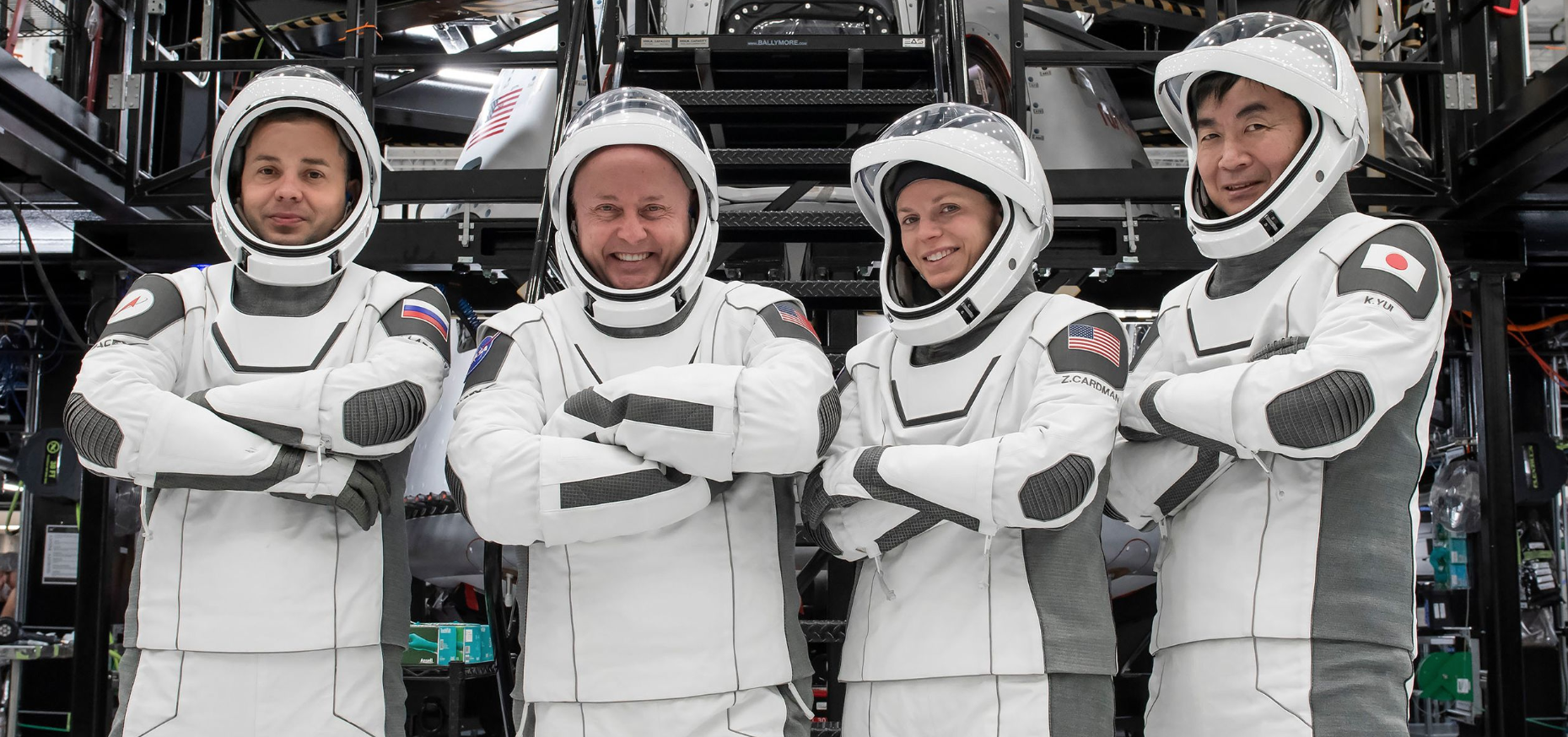
(TechGenez) – NASA has disclosed new details about the medical event that triggered the first-ever full-crew medical evacuation from the International Space Station, confirming that astronaut Mike Fincke experienced a condition requiring advanced diagnostic imaging unavailable on orbit
In a statement shared by the agency, Fincke described the January 7, 2026 incident as one that “required immediate attention from my incredible crewmates.” The agency emphasized that the situation was managed calmly and deliberately, with the entire Crew-11 team—Fincke, Zena Cardman (NASA), Kimiya Yui (JAXA), and Oleg Platonov (Roscosmos)—returning safely to Earth via SpaceX Dragon capsule on January 15 after 167 days in space.
The early return marked a historic first for the 25-year-old orbital laboratory, where no prior long-duration mission had been shortened specifically for medical reasons.
Incident Timeline and Decision
Crew-11 launched on August 1, 2025 for what was planned as a standard six-month rotation. On January 7, NASA announced the cancellation of a planned spacewalk by Cardman and Fincke due to a “medical concern” with an ISS crew member.
The following day, the agency confirmed the mission would end early to allow proper medical evaluation on Earth.
NASA Administrator Jared Isaacman described the situation as “serious but stable,” clarifying: “It was not an emergency de-orbit, even though we always retain that capability. NASA and our partners train for that routinely.” He added that “the capability to diagnose and treat this properly does not live on the International Space Station.”
The decision prioritized crew health and safety while maintaining continuous ISS operations with the remaining three-person skeleton crew (one American and two Russians) until replacements arrived in February.
Crew and Mission Background
- Mike Fincke – Veteran astronaut on his fourth mission; accumulated 549 total days in space prior to Crew-11.
- Zena Cardman – First spaceflight; served as mission commander.
- Kimiya Yui – Second flight; added 165 days to his career total of 309 days.
- Oleg Platonov – First spaceflight.
The crew splashed down off the coast of California at 3:41 a.m. EST on January 15. Fincke reported post-flight: “I am doing very well and continuing standard post-flight reconditioning” at NASA Johnson Space Center in Houston.
He added: “Spaceflight is an incredible privilege and sometimes it reminds us just how human we are.”
Medical and Operational Impact
NASA has not disclosed the specific nature of Fincke’s condition, citing medical privacy. The agency stressed that the astronaut remained stable throughout and that the situation never reached emergency de-orbit status.
The early departure temporarily reduced ISS crew size to three, leading NASA to pause spacewalks and scale back certain research activities until Crew-12 arrived in February, restoring normal operations.
The incident highlights ongoing limitations in orbital medical capabilities. While the ISS carries advanced diagnostic tools, complex imaging (e.g., MRI or CT-equivalent) and certain treatments require return to Earth.
Broader Context
Crew-11’s return follows the Boeing Starliner crew flight test issues that extended the stay of Butch Wilmore and Suni Williams in 2025. The mission demonstrated both the reliability of SpaceX’s Crew Dragon as a contingency return vehicle and NASA’s ability to adapt crew rotations under unforeseen circumstances.
The event also underscores the importance of medical planning for future deep-space missions to the Moon and Mars, where return windows will be measured in weeks or months rather than hours.
Challenges
- Maintaining full crew complement during rotations remains operationally complex.
- Privacy considerations limit public disclosure, sometimes fueling speculation.
- Long-duration flight continues to pose physiological and psychological risks that require ongoing study.
Outlook
NASA will conduct detailed post-flight medical evaluations and mission debriefings.
Findings will inform improvements to on-orbit medical protocols and hardware for future stations and exploration missions.
The agency expects normal research and maintenance cadence to resume fully with the current seven-person crew.
Conclusion
The safe return of Crew-11 following the first medical evacuation in ISS history demonstrates NASA’s robust contingency planning and international cooperation. While the incident was managed without crisis, it serves as a reminder of the human vulnerabilities inherent in long-duration spaceflight and the critical need for advanced medical capabilities as humanity prepares to venture farther from Earth.