


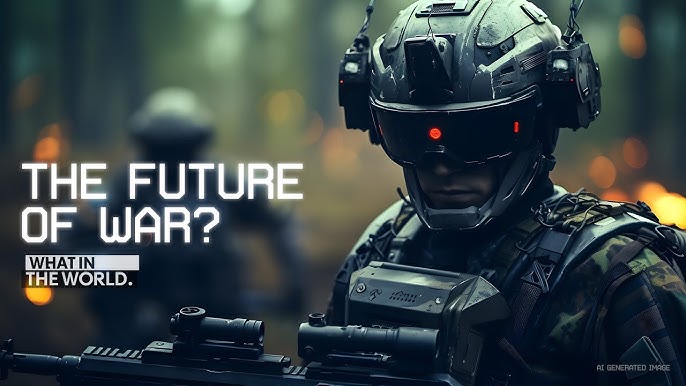
(TechGenez) – Artificial intelligence has emerged as a transformative force in modern warfare, accelerating decision-making, enhancing precision, and reshaping battlefield dynamics from data analysis to autonomous systems.
In 2026, AI’s role is evident in ongoing conflicts, including Russia’s war in Ukraine and the USA-Israel alliance against Iran. These theaters demonstrate AI’s dual-edged nature: boosting military effectiveness while raising profound ethical concerns about autonomy, civilian risks, and escalation.
As nations race to integrate AI, experts warn of an arms competition that could redefine global security, with the U.S. Department of War’s 2026 AI Strategy emphasizing dominance through technologies like drones and intelligence platforms.
AI’s General Role in Warfare
AI has evolved from research labs to frontline deployment, providing advantages in scale, speed, and effectiveness. According to the U.S. Army War College, AI integration boosts drone strike accuracy from 30-50% to 80%, as seen in Ukraine.
Key applications include:
- Data processing: AI analyzes vast intelligence from satellites, drones, and social media for real-time insights.
- Autonomous systems: Partially autonomous weapons handle targeting and navigation, with full autonomy on the horizon.
- Cyber and electronic warfare: AI detects threats, simulates scenarios, and adapts defenses.
- Information operations: Generative AI creates disinformation, deepfakes, and propaganda.
RAND Corporation reports AI could reshape four essential competitions: cyber offense vs. defense, command and control, logistics, and information superiority.
However, experts like those at the Center for a New American Security note that AI remains experimental in many areas, primarily supporting human decisions rather than replacing them.
AI in the Russia-Ukraine War
Since Russia’s 2022 invasion, Ukraine has become a “living lab” for AI warfare, per CSIS analysis. Both sides deploy AI extensively, but Ukraine’s agile ecosystem gives it an edge in innovation.
Ukrainian applications:
- Geospatial intelligence: AI geolocates Russian forces using social media, drone footage, and satellites, per CNAS.
- Drone operations: AI enables autonomous last-mile navigation, target recognition, and swarming, boosting FPV drone accuracy to 80%.
- Cyber defense: AI processes 50,000+ monthly video streams for threat detection, per Ukraine’s deputy defense minister.
- De-mining and reconnaissance: Neural networks analyze imagery to identify mines and troop movements.
Russian uses:
- Loitering munitions and ISR platforms: AI integrates with UAVs for target recognition and swarming.
- Electronic warfare: Adaptive AI tools counter Ukrainian drones.
- Information operations: Generative AI amplifies disinformation, per RUSI.
ICDS Estonia reports AI saves Ukrainian lives by automating hazardous tasks. Russia benefits from Chinese dual-use tech, per ODNI, but lags in deployment due to sanctions.
AI in the USA-Israel-Iran Conflict
The 2026 USA-Israel-Iran war represents AI’s first large-scale integration in precision strikes and multidomain operations, per WSJ and Nature reports.
U.S. and Israeli applications:
- Project Maven: AI processes battlefield data for target identification, used in Epic Fury/Roaring Lion operations to kill Iran’s Supreme Leader.
- Intelligence analysis: AI sifts satellite imagery, communications, and social media for real-time targeting.
- Missile defense: AI enhances Iron Dome and David’s Sling for intercepting Iranian ballistic missiles.
- Cyber operations: AI-powered tools cripple Iranian banking and command systems.
Foreign reports indicate Israel’s Habsora and Lavender AI systems generate targets, reducing human review time. Drones smuggled into Iran used AI for reconnaissance.
Iranian responses:
- AI-enhanced drones and cyber attacks, though less advanced.
Experts warn AI’s speed raises ethical questions, potentially reducing civilian casualties through precision but risking errors in urban environments.
Ethical and Strategic Challenges
AI’s warfare impact raises profound concerns:
- Autonomy risks: Fully autonomous systems could escalate conflicts without human judgment, per UN and ICRC.
- Bias and errors: Algorithms trained on incomplete data may misidentify targets, leading to civilian harm.
- Arms race: CRINK nations (China, Russia, Iran, North Korea) collaborate on AI weapons, per ODNI, challenging U.S. dominance.
- Disinformation: Russia uses AI for deepfakes in Ukraine, per RUSI.
NATO’s 2026 summit shifts focus from tanks to drones and AI, per Bloomberg.
Outlook
- AI will dominate future warfare, with the DoW’s 2026 strategy aiming for “Military AI Dominance” through export controls and investments.
- Ukraine and Iran conflicts serve as testing grounds, accelerating adoption of AI in drones, ISR, and cyber domains.
- Experts call for international agreements to govern lethal autonomous weapons and surveillance AI.
Conclusion
AI’s integration in modern warfare, exemplified by Ukraine’s drone innovations and USA-Israel’s precision strikes on Iran, has fundamentally altered conflict dynamics by enhancing speed, accuracy, and scale. However, without robust ethical frameworks and international oversight, AI risks amplifying harms and fueling an uncontrollable arms race.