



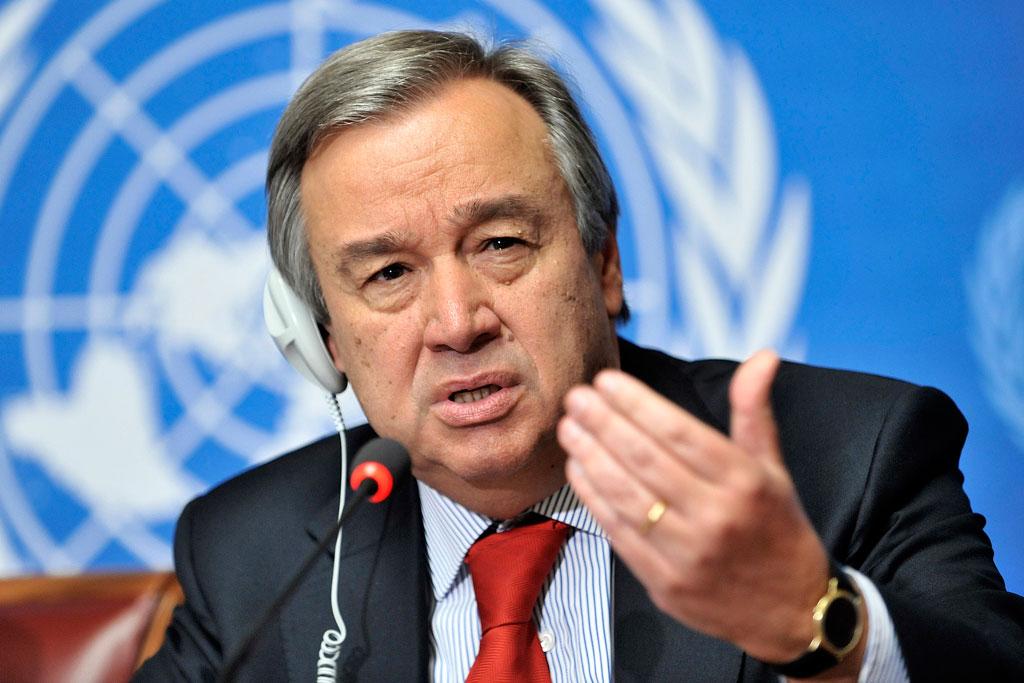
GENEVA (TechGenez) – UN Secretary-General Antonio Guterres warned on Monday that artificial intelligence is advancing faster than the world can establish proper oversight, calling for globally harmonised rules to protect children and prevent the technology from causing harm.
Guterres delivered his message at the first-ever government-level global dialogue on AI in Geneva. He stressed that while AI offers enormous opportunities, it must be developed with guardrails in place.
“ A technology that can reshape economies, transform the world of work, sway elections and tilt the balance of security is being deployed faster than anyone, including the people building it, can keep up,” Guterres told delegates. “Innovation needs guardrails. If AI is to be powerful, it must be governed.”
The two-day dialogue is not meant to produce a binding treaty. Instead, it aims to discuss practical ways to manage the risks of AI while maximising its benefits.
AI Is Outpacing Oversight
Guterres highlighted how AI is moving at an unprecedented speed. He pointed out that it took the internet 15 years to reach one billion users, while AI reached that milestone in just two years.
The UN chief also warned that the most advanced AI systems are concentrated in a few countries and companies, leaving developing nations with limited influence over the technology’s future.
Focus on Protecting Children
A major part of Guterres’ message was the urgent need to protect children. He cited examples of young people being steered toward self-harm or deceived by AI systems pretending to be friends.
“We do not let medicine reach a child until it is proven safe. We test every toy. Yet AI has reached our children – their learning, their friendships, their most private questions – before anyone asked what it would do to them,” he said.
Guterres proposed an AI Child Safety Pledge. Under this idea, companies building AI systems would need to demonstrate they are safe before making them available to children. He also called for strict rules against generating sexual images of children and requiring AI systems to stop and connect distressed users with human help.
Scientific Assessment Released
The dialogue coincides with the release of a major UN-backed report by an independent panel of 40 scientific experts. The report, the first global independent assessment of AI, found that development remains heavily concentrated:
- The United States accounts for 75% of computing power among the world’s top 500 AI supercomputers
- China holds 15%
- Adoption of conversational AI is growing fast globally but lags significantly in developing countries
A more detailed report is planned for next year, along with a follow-up global meeting in New York.
Opportunities and Risks
Guterres acknowledged AI’s potential to act as a “great equalizer” in the 21st century, compressing decades of progress into a few years and helping countries leapfrog development in areas such as healthcare and education.
However, he stressed that the world’s institutions are not yet ready for machines that make decisions. Strong international rules are needed to ensure AI serves humanity rather than harming it.
Conclusion
Antonio Guterres’ warning at the UN AI dialogue highlights a critical moment in the history of artificial intelligence. With development racing ahead of governance, the world must act now to create shared rules that protect the most vulnerable — particularly children — while harnessing the technology’s enormous potential.