





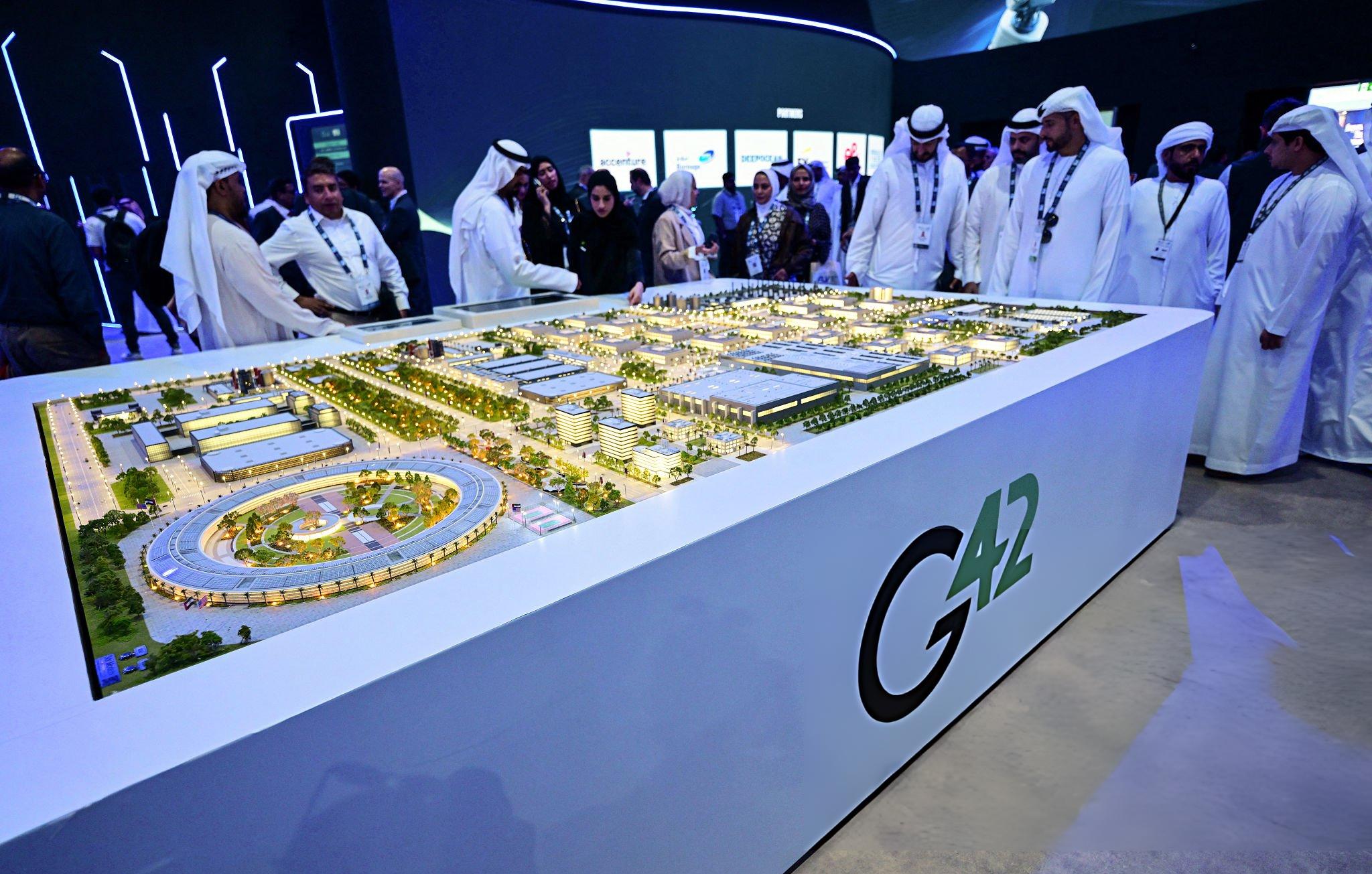
(TechGenez) – Iran’s Islamic Revolutionary Guard Corps (IRGC) has issued a direct threat to strike OpenAI’s planned $30 billion Stargate data center in Abu Dhabi, warning of “complete and utter annihilation” of U.S.-linked technology and energy infrastructure in the region if the United States attacks Iranian power plants.
The threat was delivered in a video posted on April 3 to an Iranian state-backed news outlet’s X account, which displayed satellite imagery of the Stargate facility under construction in the United Arab Emirates and a photo of executives involved in the project.
The escalation comes amid heightened tensions following recent statements from President Donald Trump threatening military action against Iran if it does not open the Strait of Hormuz and reach a broader agreement with the U.S.
#BREAKING
— Tehran Times (@TehranTimes79) April 3, 2026
Spokesman of Iran's Khatam al-Anbiya Headquarters:
Nothing is hidden from our sight.
All ICT companies in the region will be considered legitimate targets for us. pic.twitter.com/nFdvWjoh5R
Details of the Threat
The IRGC video explicitly referenced the Stargate project, showing what appears to be Google Maps imagery of the site alongside a photograph of key figures backing the initiative. The image mistakenly identified Cisco’s chief product officer Jeetu Patel as Microsoft CEO Satya Nadella.
The message warned that any U.S. strike on Iranian power infrastructure would trigger retaliation against American-linked facilities in the Gulf, including the massive AI data center.
OpenAI did not immediately respond to requests for comment. The company is developing Stargate as part of a broader $500 billion AI infrastructure initiative involving partners such as Oracle, Nvidia, Cisco, and SoftBank.
Project Background
Stargate is designed to be one of the largest AI computing facilities ever built, with plans for up to 16 gigawatts of compute power. An October 2025 update indicated that construction was “well underway,” with an initial target of deploying 200 megawatts in 2026.
The facility is intended to support the training and operation of frontier AI models, addressing the enormous computational demands of next-generation artificial intelligence systems.
The UAE has positioned itself as a strategic hub for AI development, leveraging abundant energy resources and a favorable business environment to attract major international investments.
Geopolitical Context
The threat follows Trump’s recent statements on Truth Social and in interviews, where he warned of “Power Plant Day” and “Bridge Day” if Iran fails to comply with U.S. demands regarding the Strait of Hormuz. He also told ABC News that the U.S. was prepared to take decisive military action if no agreement is reached.
Iran’s Foreign Ministry responded on Monday, stating the country is “determined to defend our national security and sovereignty with all might.”
The Stargate project’s location in Abu Dhabi places it within range of potential Iranian retaliation, raising serious security concerns for one of the most ambitious AI infrastructure efforts globally.
Challenges and Implications
Protecting a facility of Stargate’s scale from state-sponsored threats presents significant security and engineering challenges. The project’s massive power requirements already make it a complex undertaking; adding robust defenses against potential attacks increases both cost and complexity.
The Iranian threat highlights how AI infrastructure is increasingly viewed through a national security lens, turning commercial technology projects into potential strategic targets in regional conflicts.
OpenAI and its partners will likely need to enhance physical and cyber defenses and coordinate closely with UAE and U.S. authorities to mitigate risks.
Outlook
Construction of the Stargate data center is scheduled to continue, with initial operational capacity targeted for 2026–2028. However, the Iranian warning may prompt a reassessment of security protocols and contingency planning.
The incident underscores the growing intersection of artificial intelligence, geopolitics, and military strategy. As nations compete for supremacy in AI capabilities, even civilian infrastructure projects are becoming potential flashpoints in broader conflicts.
Conclusion
Iran’s explicit threat against OpenAI’s Stargate data center in Abu Dhabi marks a dangerous escalation in the use of commercial AI infrastructure as leverage in regional tensions. The incident illustrates how the AI boom is reshaping not only technology and economics but also the landscape of international security and conflict.