





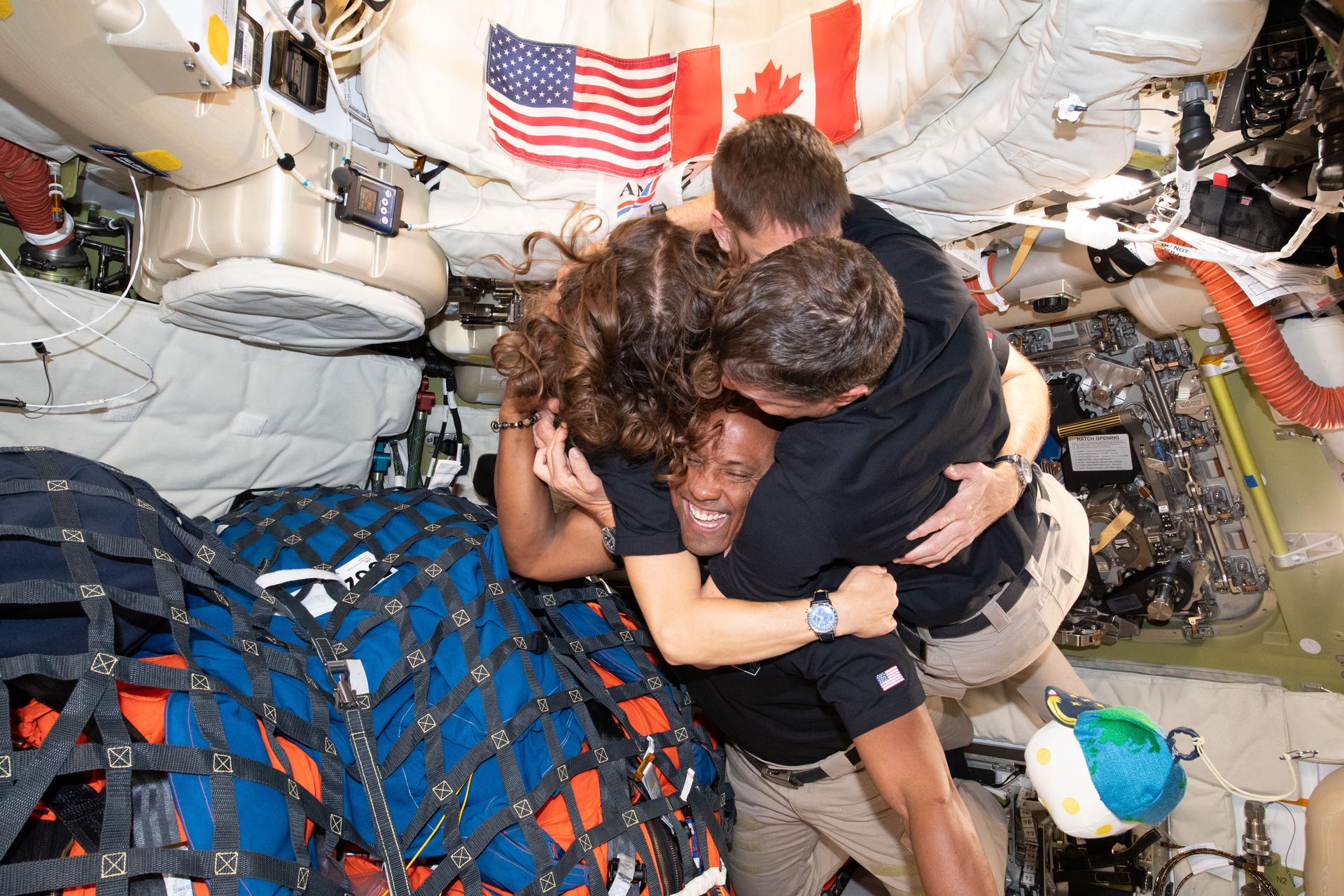
(TechGenez) – The four astronauts aboard NASA’s Artemis II mission are spending their final full day in space preparing for a dramatic high-speed return to Earth, scheduled to splash down off the coast of San Diego on Friday, April 10 at 8:07 p.m. EDT.
NASA astronauts Reid Wiseman, Victor Glover, and Christina Koch, along with Canadian Space Agency astronaut Jeremy Hansen, began the day with a musical wake-up call of “Lonesome Drifter” by Charley Crockett as their spacecraft, Orion, was approximately 147,337 miles from Earth.
The crew is conducting final checks and procedures ahead of re-entry, including a trajectory correction burn and cabin reconfiguration for splashdown. This mission marks the first time humans have traveled beyond low-Earth orbit since the Apollo era more than 50 years ago.

Final Preparations in Orbit
On their last full day aboard Orion, the crew is focusing on several critical tasks:
- Stowing equipment and cargo that has been in use during the mission
- Removing locker netting and installing and adjusting crew seats for re-entry
- Reviewing the latest weather briefing, recovery force status, and entry timeline
- Conducting a return trajectory correction burn to fine-tune Orion’s path toward Earth
The second return trajectory correction burn is scheduled for 9:53 p.m. EDT on Wednesday, with Hansen monitoring the spacecraft’s guidance, navigation, and propulsion systems during the maneuver.

Re-Entry and Splashdown Timeline
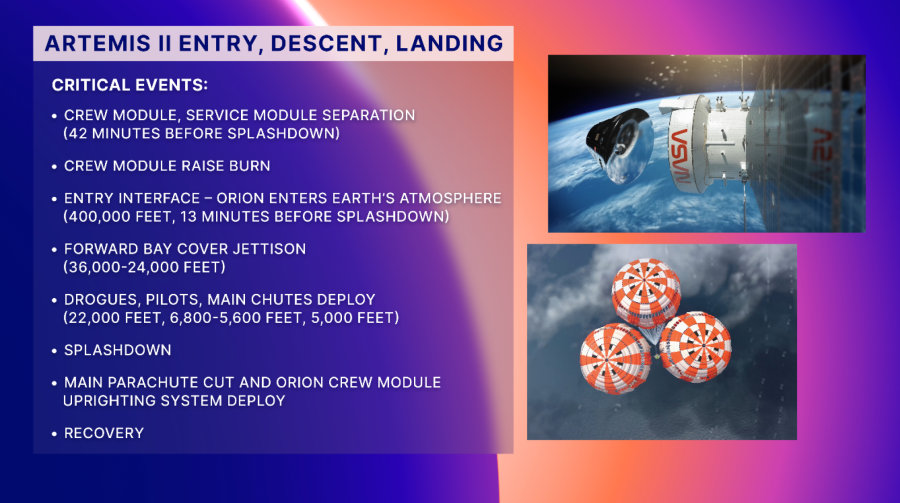
Orion’s service module is scheduled to separate around 7:33 p.m. EDT on Friday, approximately 20 minutes before the spacecraft reaches the upper atmosphere southeast of Hawaii.
Key milestones during re-entry include:
- A final trajectory adjustment burn at 7:37 p.m.
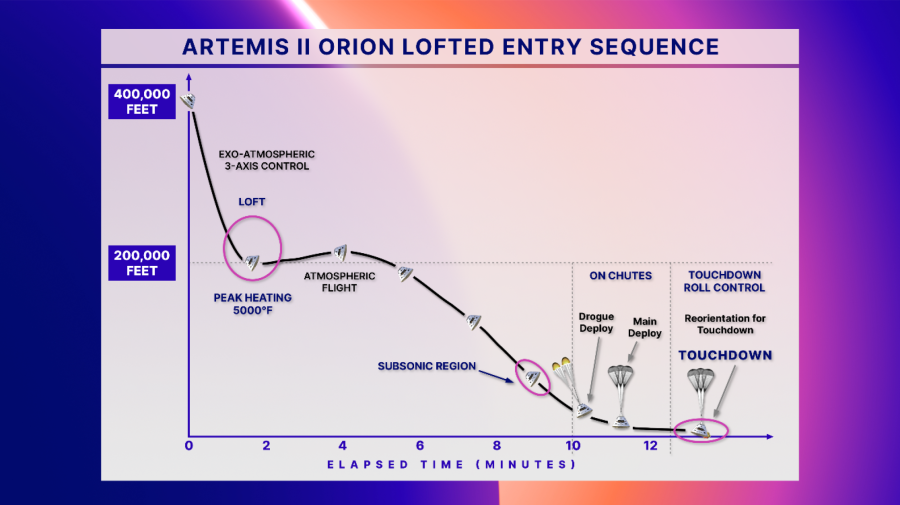
- Entry interface at approximately 400,000 feet, followed by a planned six-minute communications blackout due to plasma formation around the capsule
- Peak heating and deceleration reaching up to 3.9 Gs in a nominal landing profile
- Deployment of drogue parachutes near 22,000 feet at 8:03 p.m., followed by main parachutes around 6,000 feet at 8:04 p.m.
The capsule is expected to splash down in the Pacific Ocean off San Diego at 8:07 p.m. EDT (5:07 p.m. PDT).

Recovery Operations
Within two hours of splashdown, recovery teams will extract the crew using helicopters and transport them to the USS John P. Murtha for initial post-mission medical evaluations. The astronauts will then board an aircraft bound for NASA’s Johnson Space Center in Houston for further debriefing and rehabilitation.
NASA teams on the ground are completing final preparations for the re-entry and recovery phase, with live coverage available across multiple platforms starting at 6:30 p.m. EDT.


Mission Significance
Artemis II is the first crewed flight of the Artemis program and the first time humans have ventured beyond low-Earth orbit since Apollo 17 in 1972. The mission successfully tested Orion’s systems during a lunar flyby, paving the way for future crewed landings on the Moon under the Artemis III mission.
The crew’s safe return will mark the successful completion of a critical test flight that validates the spacecraft’s heat shield, life support systems, and re-entry capabilities for deep-space missions.
Challenges
Re-entry from lunar distances presents unique challenges, including higher velocities and more intense heating than low-Earth orbit returns. The crew will experience significant G-forces during deceleration, requiring careful preparation and monitoring.
Coordinating the complex recovery operation in the Pacific Ocean involves multiple agencies and vessels, with weather conditions playing a critical role in timing and safety.
Outlook
Following splashdown, the crew will undergo extensive post-flight medical evaluations and debriefings to gather data for future Artemis missions.
NASA will continue to analyze telemetry and performance data from the entire mission to refine procedures for Artemis III and beyond.
The successful return of Artemis II will be a major milestone toward returning humans to the lunar surface later this decade.
Conclusion
As the Artemis II crew prepares for their historic return to Earth, the mission stands as a testament to decades of engineering progress and international collaboration. Their safe splashdown will not only close an important chapter in NASA’s human spaceflight program but also set the stage for humanity’s next giant leap — a sustained presence on the Moon and eventual missions to Mars.