





VATICAN CITY – The Vatican will introduce artificial intelligence-assisted live translation of Mass in 60 languages starting next week at St. Peter’s Basilica, becoming one of the most prominent institutions to embrace AI for worship services during the Fourth Centenary celebrations of the basilica’s dedication (1626–2026).
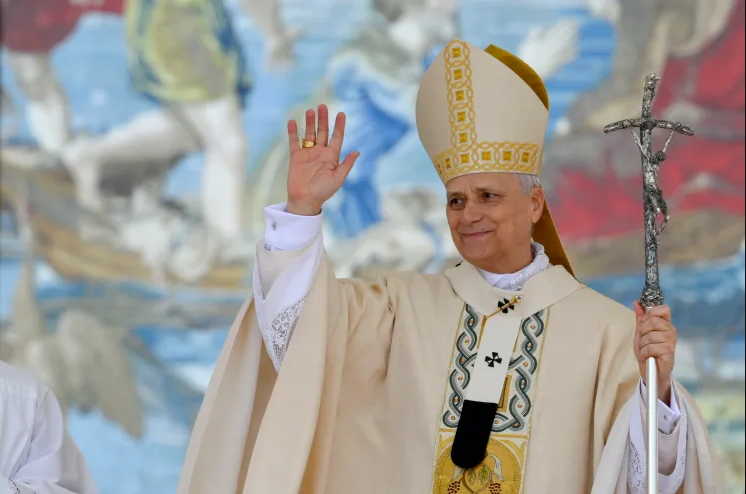
Cardinal Mauro Gambetti, Archpriest of St. Peter’s Basilica and Vicar General of Vatican City, announced the initiative as a way to fulfill the Church’s universal mission. “Saint Peter’s Basilica has, for centuries, welcomed the faithful from every nation and tongue,” he said. “In making available a tool that helps many to understand the words of the liturgy, we wish to serve the mission that defines the centre of the Catholic Church, universal by its very vocation.”
The service will allow worshippers to follow Mass in real time on their smartphones via QR codes scanned at entrances, delivering audio and text translations through web browsers without requiring any app download.
Technology and Implementation
The translation system is powered by Lara, an AI developed by language solutions company Translated in collaboration with Carnegie-AI LLC and Professor Alexander Waibel, a pioneer in AI-powered speech translation.
Lara processes live audio from the Mass and generates real-time translations with high accuracy, using extensive context to reduce errors and hallucinations. Translated CEO Marco Trombetti explained: “Lara is designed for accuracy rather than eagerness to please. This significantly limits hallucinations. Lara also uses more context than previous technologies, enabling it to disambiguate meaning much more effectively.”
Professor Waibel added: “Today, we see the possibility to break language barriers in real time, realised in one of the most meaningful settings imaginable.”
The Vatican has emphasized that the tool is designed to support, not replace, traditional liturgical participation and clergy-led worship.
Privacy and Ethical Considerations
The system incorporates strong privacy measures, including end-to-end encryption and no storage of personal data from translations. Conversations and user interactions remain local to the device where possible.
The initiative arrives amid broader Church reflection on AI. Pope Leo XIV, in a May 2025 address, acknowledged the technology’s potential while warning of challenges to “human dignity, justice and labour.”
The Vatican consulted ethicists and theologians during development to ensure alignment with Catholic teaching.
Broader Context
The project reflects growing institutional adoption of AI for accessibility. Similar real-time translation tools have been piloted in interfaith gatherings and international conferences.
St. Peter’s Basilica, with millions of annual visitors from every continent, serves as an ideal venue to demonstrate AI’s capacity to bridge linguistic divides in sacred contexts.
The Fourth Centenary celebrations (2026) commemorate the basilica’s consecration in 1626, with events expected to draw record global attendance.
Challenges
- Accuracy in liturgical Latin and multilingual nuances remains a technical challenge, though developers claim significant improvements.
- Some traditionalists have expressed concerns about technology in sacred spaces, while others welcome broader accessibility.
- The Vatican will monitor feedback closely during the initial rollout.
Outlook
- The service launches next week and will continue through the centenary year.
- If successful, it could expand to other major basilicas and dioceses worldwide.
- The initiative positions the Catholic Church as an early institutional adopter of AI for inclusive worship.
Conclusion
By integrating AI-assisted translation into St. Peter’s Basilica services, the Vatican takes a bold step toward making one of Christianity’s holiest sites linguistically accessible to the global faithful. The project balances technological innovation with pastoral care, potentially setting a precedent for religious institutions worldwide in the AI era.