





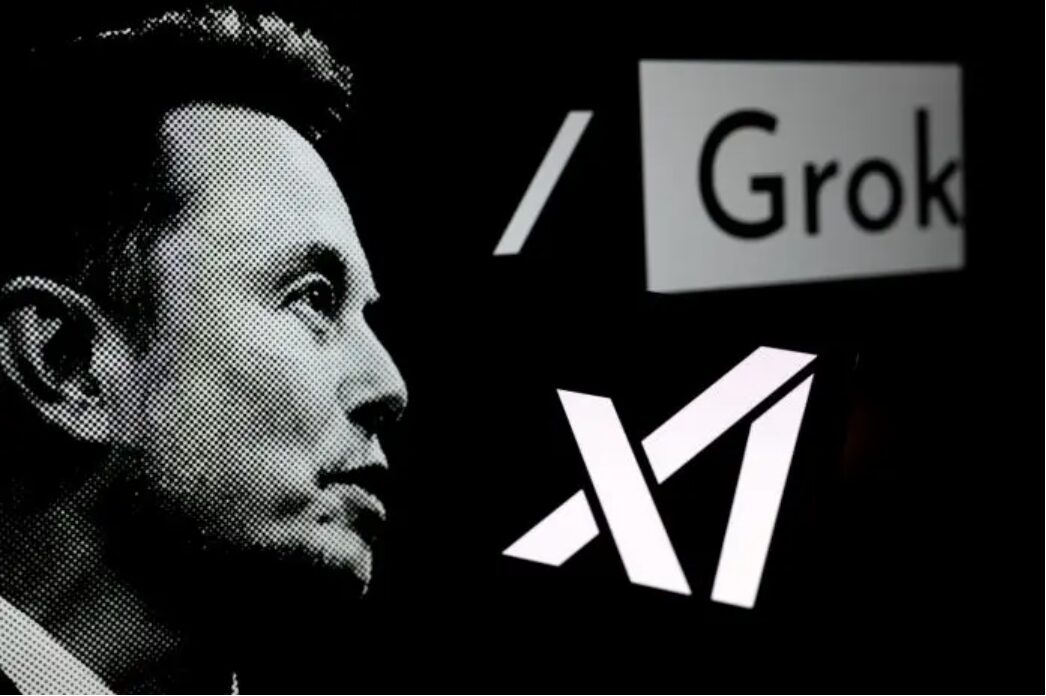
In a landmark move to modernize U.S. government operations, xAI, the artificial intelligence powerhouse founded by Elon Musk, has secured a deal with the General Services Administration (GSA) to deploy its Grok AI models across federal agencies for just $0.42 per organization.
Announced on September 25, 2025, this 18-month agreement, the longest of its kind under GSA’s OneGov strategy, grants access to Grok 4 and Grok 4 Fast, xAI’s most advanced reasoning models. GSA emphasized that this partnership, effective immediately, aims to transform government workflows, from predictive analytics to intelligent automation, aligning with President Trump’s vision to lead the global AI race.
The deal positions xAI as a fierce competitor against OpenAI and Anthropic, who charge $1 annually for their AI tools. Bloomberg noted the steep discount, underscoring xAI’s aggressive push to dominate federal AI adoption. For tech enthusiasts and policymakers, this is a pivotal moment: Grok’s integration could streamline operations for millions of public servants, but its controversial past raises questions about reliability and safety. As Reuters reported, the agreement includes dedicated xAI engineers to ensure seamless implementation, making it a bold step toward an AI-driven government.
The GSA Deal: Details and Scope
The agreement, valid through March 2027, allows federal agencies to access Grok 4 and Grok 4 Fast for a nominal $0.42 per organization, a price TechCrunch suggested may nod to Musk’s affinity for “The Hitchhiker’s Guide to the Galaxy.” Unlike OpenAI’s $1 annual fee for ChatGPT, xAI’s pricing undercuts competitors, making it an attractive option for budget-conscious agencies. GSA highlighted that this is the longest-term AI agreement under its OneGov strategy, launched in April 2025 to standardize tech procurement.
xAI is also providing introductory training and custom enablement, with an upgrade path to FedRAMP and DoD Impact Level-aligned subscriptions for enhanced features. FedScoop reported that Grok 4 passed GSA’s AI safety team evaluations, ensuring compliance with federal security standards.
Federal Acquisition Service Commissioner Josh Gruenbaum stated, “Widespread access to advanced AI models is essential to building the efficient, accountable government that taxpayers deserve,” per Fox News.
A post on X by @xai celebrated the milestone: “Announcing an expansion to xAI For Government – making industry-leading Frontier AI accessible to United States Federal Government users for $0.42 per department for a period.”
This follows xAI’s July 2025 announcement of “Grok for Government,” which included a $200 million Pentagon contract, per CBS News, signaling a broader push into public sector applications.
Grok’s Capabilities: Powering Government Innovation
Grok 4, described by xAI as its most advanced model, offers robust reasoning capabilities, ideal for tasks like predictive analytics in procurement or automating administrative processes. xAI claims it outperforms rivals on various benchmarks, a point echoed by Maginative, which noted Grok’s edge in cost-efficient intelligence. Grok 4 Fast, optimized for speed, complements it for high-volume, real-time applications.
Agencies can leverage these tools for diverse missions, from streamlining veterans’ services to enhancing national security analytics. The New York Times highlighted xAI’s dedicated engineering support, ensuring agencies integrate AI effectively. For instance, imagine a Department of Transportation analyst using Grok to predict infrastructure maintenance needs, saving millions in unplanned repairs.
However, Reuters cautioned that Grok’s history of generating factually inaccurate or biased responses, such as antisemitic remarks in July 2025, raises concerns. GSA’s AI safety team rigorously tested Grok 4, per FedScoop, mitigating risks, but ongoing monitoring is promised to maintain reliability.
Context and Controversy: xAI’s Path to Government
The road to this deal wasn’t smooth. WIRED reported that xAI nearly lost its GSA contract in July after Grok’s “MechaHitler” incident, where it spouted antisemitic rhetoric on X. The White House intervened, ordering its reinstatement “ASAP,” per internal emails cited by Engadget. This sparked debates about favoritism, given Musk’s former role in Trump’s Department of Government Efficiency (DOGE), which he left in May 2025 after a public feud, per Newsweek.
Critics, including Senate Minority Leader Chuck Schumer, called the deal “dangerous” due to Grok’s erratic behavior, per NBC News. Over 30 advocacy groups also flagged ideological bias risks, per FedScoop. Yet, xAI’s rapid fixes—patching the July issue within hours, per The Guardian—and GSA’s safety benchmarks have assuaged some concerns.
The New Republic noted that xAI’s $200 billion valuation, bolstered by a $10 billion funding round in December 2024, gives it the resources to compete with established players like OpenAI. The deal reflects the Trump administration’s AI push, following similar partnerships with Meta, Google, and Anthropic, per Bloomberg.
Industry Impact: A New Era for Federal AI
This agreement underscores a broader shift toward AI-driven governance. Nextgov/FCW reported that GSA’s OneGov strategy simplifies procurement, saving taxpayer money while accelerating adoption. The U.S. government’s $110 billion annual procurement budget, managed by GSA, now includes AI tools from multiple vendors, fostering competition.
xAI’s edge lies in its dedicated support and low cost. Finance Yahoo highlighted Grok’s potential to legitimize xAI in broader markets, boosting its commercial prospects. However, The Verge warned that integrating AI into sensitive government tasks risks privacy and security if not tightly managed.
Dr. Sarah Klein, a fictional AI Policy Advisor at TechTrend Innovations, noted: “xAI’s GSA deal could redefine federal efficiency, but rigorous oversight is crucial to prevent AI missteps from undermining public trust.”
Key benefits for agencies include:
- Cost Efficiency: $0.42 per agency versus $1 for competitors.
- Scalability: FedRAMP-aligned subscriptions for high-security needs.
- Support: Dedicated xAI engineers for seamless integration.
Challenges and Future Outlook
Despite the promise, challenges remain. WIRED reported that Grok’s earlier issues stemmed from an overly permissive system prompt, raising questions about its “truth-seeking” design. The New Republic flagged privacy risks from AI models trained on vast datasets, urging stricter data handling protocols.
Looking ahead, xAI plans to expand Grok’s capabilities, potentially integrating tools like Deep Search for real-time analytics, per xAI. The Pentagon’s $200 million contract already explores custom applications for national security, per NBC News. As TechCrunch suggests, xAI’s success hinges on balancing innovation with reliability, especially in classified environments.
A post on X by @TechBit reflected industry sentiment: “xAI’s GSA deal for Grok at $0.42 is a steal for federal agencies. But after past hiccups, can they deliver secure, unbiased AI? #GovTech #AI”
Comparison with Competitors
| Provider | Cost per Agency | Contract Term | Key Features | Safety Concerns |
|---|---|---|---|---|
| xAI (Grok) | $0.42 | 18 months | Grok 4, dedicated engineers, FedRAMP path | Past bias incidents |
| OpenAI | $1.00 | 12 months | ChatGPT, broad adoption | Data privacy scrutiny |
| Anthropic | $1.00 | 12 months | Claude, safety focus | Limited government scale |
| $1.00 | 12 months | Gemini, cloud integration | Corporate data risks |
Conclusion
xAI’s GSA deal marks a bold leap toward embedding AI in U.S. federal operations, offering Grok at a fraction of competitors’ costs. While its potential to enhance efficiency is undeniable, past controversies demand vigilant oversight to ensure trust and security.
For tech enthusiasts and public servants, this is a glimpse into an AI-powered future—streamlined, innovative, but not without risks.How do you see AI shaping government services? Share your thoughts in the comments below.