





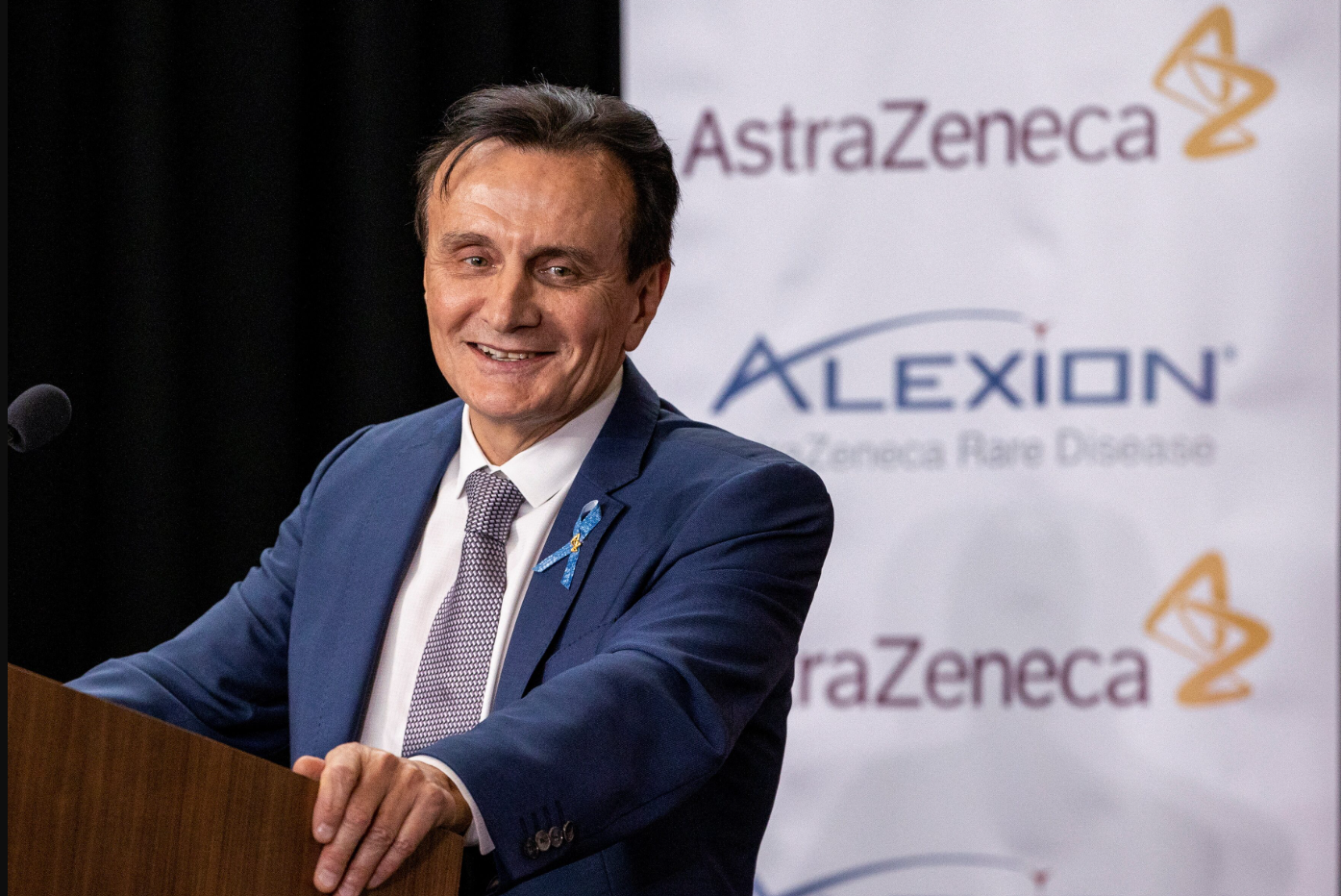
AstraZeneca has agreed a partnership with U.S. startup Algen Biotechnologies worth up to $555 million to develop new gene-editing therapies for immune disorders, the companies said on Monday.
The deal gives the British drugmaker exclusive rights to use Algen’s artificial intelligence platform to identify targets for CRISPR-based treatments, with an undisclosed upfront payment and potential milestone payments and royalties.
AstraZeneca aims to expand its portfolio in cell and gene therapies as it targets $80 billion in annual revenue by 2030. This latest collaboration reflects the growing integration of AI in drug discovery, a trend that promises to accelerate the identification of therapeutic targets and reduce development timelines.
Immune disorders, such as rheumatoid arthritis, lupus and multiple sclerosis, affect millions worldwide and often require lifelong management. By leveraging AI to pinpoint genetic drivers, the partnership could lead to more precise interventions, potentially offering curative options where current treatments only alleviate symptoms.
Deal Terms
Under the agreement, AstraZeneca will handle development and commercialization of any resulting therapies focused on immune system conditions such as autoimmune diseases.
Algen, founded in 2020 and based in San Francisco, will receive upfront and near-term payments, with the total value reaching $555 million if milestones are met, plus royalties on sales. The structure is typical of “biobucks” deals in biotech, where payments are tied to progress in research, clinical trials and regulatory approvals.
Algen’s platform uses machine learning to analyze genetic data and identify genes for modulation via CRISPR, potentially offering new approaches to treating hard-to-crack illnesses. The technology scans vast datasets from genomic studies, patient samples and biological literature to predict which genes, when edited, could restore immune balance without unwanted side effects.
This exclusivity covers a broad range of immune-related indications, giving AstraZeneca flexibility to pursue multiple candidates from the collaboration.
Strategic Context
The partnership aligns with AstraZeneca’s strategy to invest in advanced technologies amid growing competition in gene editing. The company has built a robust pipeline in oncology and cardiovascular diseases through similar alliances, including a $1 billion deal with Intellia Therapeutics in 2024 for CRISPR-based therapies targeting heart conditions.
In immunology, AstraZeneca has faced challenges, such as mixed results in lupus trials for its drug anifrolumab. The Algen collaboration could bolster this area by providing novel targets, complementing existing efforts in antibody therapies and small molecules.
For Algen, the deal marks a major validation. With a team of about 20 scientists and engineers, the startup has focused on AI-driven discovery since its inception, securing seed funding from prominent venture firms like Sequoia Capital and Andreessen Horowitz. This partnership provides not only capital but also access to AstraZeneca’s global clinical and regulatory expertise.
The broader biotech sector is witnessing a surge in AI applications. Tools like AlphaFold from Google’s DeepMind have revolutionized protein structure prediction, while platforms like Algen’s extend this to therapeutic target identification. Analysts estimate that AI could cut drug development costs by up to 50% and shorten timelines from 10-15 years to as little as 5-7 years.
Market Reaction
AstraZeneca shares rose 2.5% in London trading following the announcement, reflecting investor confidence in the company’s innovation pipeline. The stock has gained 15% year-to-date, outperforming the FTSE 100 index.
The gene-editing sector is projected to grow to $15 billion by 2030, driven by approvals like Casgevy for sickle cell disease and beta thalassemia. CRISPR Therapeutics and Vertex Pharmaceuticals’ therapy, priced at $2.2 million per patient, highlights the high-value potential of such treatments.
Wall Street analysts welcomed the deal. Jefferies’ Michael Yee said in a note: “This adds depth to Astra’s immunology efforts at a reasonable cost, with upside from AI efficiencies.” Barclays upgraded AstraZeneca to “overweight,” citing the partnership as evidence of strategic agility.
Challenges
Gene-editing therapies face hurdles including off-target effects and delivery challenges. CRISPR, while revolutionary, can sometimes edit unintended genomic sites, potentially leading to safety issues like cancer risk.
Delivery remains a key barrier: Getting CRISPR components into target cells, especially in organs like the liver or lungs, requires advanced vectors such as viral carriers, which can trigger immune responses.
Clinical trials for new candidates could take several years, with success rates in biotech historically low—around 10% from preclinical to approval. AstraZeneca will need to navigate these risks while integrating Algen’s AI outputs into its R&D workflow.
Regulatory scrutiny is ramping up too. The FDA’s 2025 guidelines demand rigorous AI validation to ensure bias-free targeting, including diverse datasets to avoid disparities in treatment efficacy across ethnic groups. In Europe, the EMA has similar requirements under its AI Act.
Ethical considerations also loom, such as equitable access to high-cost therapies and the long-term implications of germline editing, though this deal focuses on somatic (non-heritable) changes.
Quotes
“This collaboration combines Algen’s AI expertise with our development capabilities to advance treatments for immune disorders,” said Sharon Barr, AstraZeneca’s executive vice president of biopharmaceuticals R&D.
Algen CEO Molecular biologist Maya Patel added: “Partnering with AstraZeneca accelerates our mission to transform patient outcomes through precision gene modulation. Our platform has the potential to uncover targets that traditional methods might miss.”
Broader Industry Trends
The deal is part of a surge in AI-biotech collaborations, including Pfizer’s pact with Tempus and Sanofi’s CRISPR alliances. AI isn’t just hype—it’s crunching data from genomes, trials, and wearables to spot patterns humans miss.
Major players like Novartis and Roche are also investing heavily, with global AI in drug discovery spending expected to reach $5 billion by 2027. Success stories include Exscientia’s AI-designed cancer drug entering trials in record time.
However, challenges persist: Data quality, algorithmic transparency, and intellectual property rights over AI-generated discoveries are ongoing debates. Regulators are pushing for “explainable AI” to ensure decisions can be audited.
In immunology specifically, the field is ripe for disruption. Current blockbusters like AbbVie’s Humira generate $20 billion annually but face patent cliffs, opening doors for next-gen therapies. AstraZeneca’s move positions it competitively against rivals like Johnson & Johnson, which acquired gene-editing firm Momenta for $6.5 billion in 2020.
Outlook
AstraZeneca expects initial candidates from the partnership to enter preclinical testing by mid-2026, with clinical trials potentially starting in 2028. If successful, commercialization could begin in the early 2030s. The company remains on track for its $80 billion revenue target, with gene therapies projected to contribute 15-20% by then.
Analysts at Morgan Stanley forecast the partnership could yield $2-3 billion in peak sales for any approved therapy, assuming market penetration in key indications. As biotech evolves, deals like this highlight AI’s role in democratizing discovery, potentially bringing affordable cures faster to patients worldwide.