



Google DeepMind has unveiled Genie 3, a groundbreaking general-purpose world model that creates interactive, navigable 3D environments from a single text prompt, marking a significant leap in AI-driven simulation. Announced on August 5, 2025, Genie 3 generates dynamic worlds in real time at 720p resolution and 24 frames per second, maintaining visual consistency for several minutes, per Google DeepMind.
Described as a “new frontier for world models,” this technology promises to transform gaming, robotics, education, and the pursuit of artificial general intelligence (AGI). With features like promptable world events and enhanced memory, Genie 3 outpaces its predecessors, but its high computational cost and current limitations spark debate about its immediate impact. Here’s the latest on Genie 3’s capabilities, applications, and the future of AI world simulation.
Genie 3: A Leap in World Model Technology
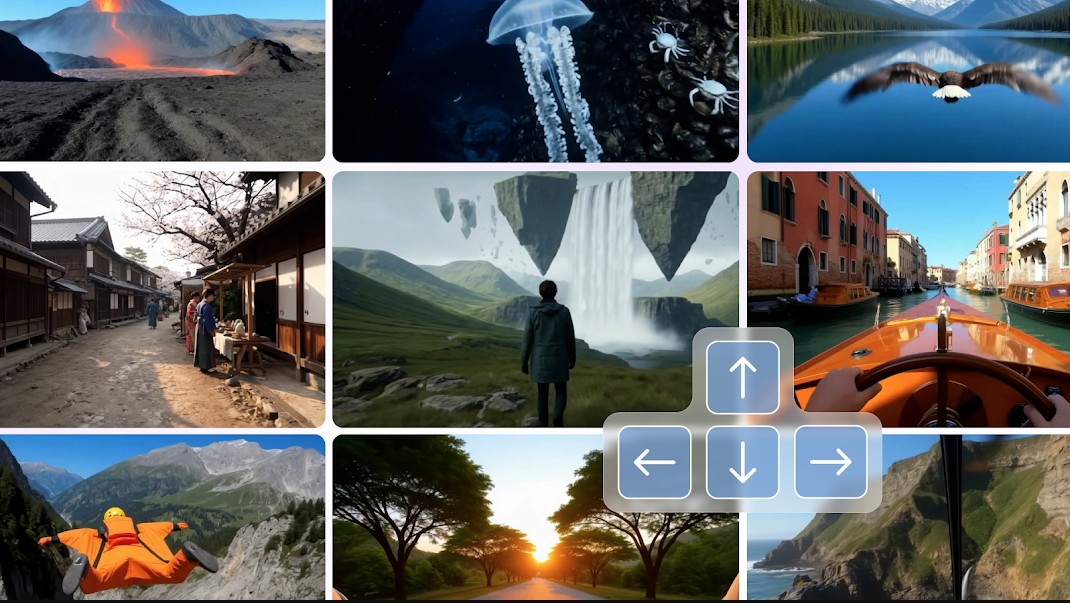
Genie 3, developed by Google DeepMind researchers Jack Parker-Holder and Shlomi Fruchter, builds on the foundation laid by Genie 1 and Genie 2, introduced in 2024, and the video generation models Veo 2 and Veo 3. Unlike traditional game engines requiring pre-built 3D assets, Genie 3 creates fully interactive worlds on the fly, responding to user inputs like keyboard navigation or text prompts, per Google DeepMind. It achieves this at 720p resolution—double Genie 2’s 360p—and sustains simulations for minutes, compared to Genie 2’s 10-20 seconds, per Ars Technica.

Key capabilities include:
- Real-Time Interactivity: Users can navigate worlds at 24 FPS, with each frame generated auto-regressively based on prior actions, ensuring seamless exploration, per TechStartups.
- Environmental Consistency: Genie 3’s “visual memory” retains scene details for up to a minute, so objects like trees or buildings remain consistent when revisited, unlike Genie 2’s fleeting 10-second memory, per Google DeepMind.
- Promptable World Events: Users can alter environments with text prompts, such as adding a herd of deer to a snowy mountain or changing weather conditions, enabling dynamic “what if” scenarios, per Engadget.
- Physical Realism: The model simulates natural phenomena like water flow, lighting, and gravity, as well as complex ecosystems with animal behaviors and plant life, per Google DeepMind. For example, a jet ski splashing through a river or a buggy bouncing on Mars craters reflects intuitive physics, per OfficeChai.
- Diverse Settings: From photorealistic landscapes like glacial lakes to fantastical realms like Japanese zen gardens or ancient Greece, Genie 3 handles varied prompts, per Google DeepMind.
A demo video showcased a user navigating a volcanic terrain, a glacial lake with wildlife, and a dimly lit ocean with bioluminescent jellyfish, all generated from text prompts, per Google DeepMind.
Fueling AGI and Agent Training
DeepMind positions Genie 3 as a critical step toward AGI, enabling AI agents to train in unlimited, diverse simulated environments, per Google DeepMind. World models like Genie 3 allow agents to predict environmental changes and action outcomes, essential for embodied AI in robotics or autonomous systems, per TechCrunch.
DeepMind tested Genie 3 with its SIMA agent, which pursued goals like navigating to a “bright green trash compactor” in a warehouse, demonstrating longer action sequences and complex task execution, per Google DeepMind.
Shlomi Fruchter, DeepMind research director, highlighted its potential for training self-driving cars on rare “what if” scenarios, like avoiding pedestrians, enhancing reliability without real-world risks, per TechStartups. Jack Parker-Holder added, “You can find things you wouldn’t want agents to do… even if settings aren’t perfect, it’s still good to know,” emphasizing its role in AI safety, per Ars Technica.
Beyond Gaming: Broader Applications
While Genie 3’s game-like worlds draw comparisons to No Man’s Sky or Minecraft, its applications extend far beyond entertainment, per ResetEra. DeepMind envisions:
- Education and Training: Interactive simulations of historical settings, like ancient Greece, or scenarios like search-and-rescue operations, could enhance learning, per Google DeepMind.
- Game Development: By generating worlds on-demand, Genie 3 could slash years off development cycles, allowing rapid prototyping of levels and concepts, per Ars Technica.
- Robotics and Autonomous Systems: Simulated environments provide safe, scalable training grounds for robots, per TechStartups.
- Creative Media: Filmmakers and artists could prototype immersive scenes, like a dinosaur in a city, per Google DeepMind.
Limitations and Challenges
Despite its advances, Genie 3 has notable limitations, per Google DeepMind:
- Limited Action Space: Agents can navigate but lack high-level reasoning to alter environments directly, restricting interactions to movement and prompted events.
- Multi-Agent Interactions: Simulating complex interactions between multiple AI agents in shared worlds remains a challenge.
- Real-World Accuracy: Genie 3 cannot replicate real-world locations with exact fidelity, limiting applications like precise geographic simulations.
- Text Rendering: Clear text generation is inconsistent unless specified in prompts.
- Interaction Duration: Simulations last minutes, not hours, falling short of persistent virtual worlds.
Responsible Development and Limited Access
DeepMind emphasizes responsible development, acknowledging Genie 3’s open-ended capabilities raise new safety and ethical concerns, per Google DeepMind. To mitigate risks, Genie 3 is launched as a limited research preview, accessible only to a select group of academics and creators for feedback, per TechCrunch. This cautious approach contrasts with consumer-facing AI like OpenAI’s ChatGPT, reflecting DeepMind’s focus on refining the model before broader release, per Ars Technica.
The model’s computational intensity—generating 24 frames per second with minutes of historical data—suggests high costs, likely limiting access to well-funded researchers or enterprises, per OfficeChai. DeepMind plans to expand access to additional testers, but no public release timeline was shared, per Google DeepMind.
Comparison to Competitors
Genie 3 outshines earlier world models like DeepMind’s Genie 2 and Decart’s Oasis, which struggled with short-term memory and lower resolution, per Engadget. OpenAI’s Sora, designed for video generation, shares similarities but lacks real-time interactivity, per Reddit. Microsoft’s experiments with AI-generated worlds, like InfinityCraft, lag behind Genie 3’s consistency and scale, per ResetEra. DeepMind’s edge lies in its vast data resources (e.g., Google Maps, YouTube) and prior breakthroughs like AlphaGo, positioning it as a leader in world model research, per Reddit.
Future Implications
Genie 3’s real-time, interactive worlds could redefine AI training, gaming, and creative industries. Its ability to simulate complex physics and ecosystems sets a new benchmark, but its high compute cost and limitations like text rendering and short interaction horizons temper expectations, per TechStartups. DeepMind’s vision of “infinite simulations” for AGI aligns with CEO Demis Hassabis’s goal to solve intelligence, per Google DeepMind. However, ResetEra users warn that without a “designer’s hand,” AI worlds may feel generic, limiting their appeal for unique gaming experiences, per ResetEra.
As DeepMind refines Genie 3, future iterations could enable persistent simulations, multi-agent interactions, and consumer access, potentially transforming industries. For now, its research preview status keeps it a tantalizing glimpse of the future, per Google DeepMind.
Conclusion
Google DeepMind’s Genie 3, launched August 5, 2025, redefines world models by generating real-time, interactive 3D environments from text prompts at 720p and 24 FPS. With features like promptable world events and minute-long visual memory, it surpasses Genie 2, offering applications in gaming, robotics, and education while advancing AGI research, per Google DeepMind.
Despite limitations like high compute costs and short interaction durations, its potential to create “infinite training environments” has sparked excitement, per X. As DeepMind opens access to researchers, Genie 3 signals a bold step toward immersive, AI-driven simulations, but its success hinges on overcoming technical and ethical hurdles