





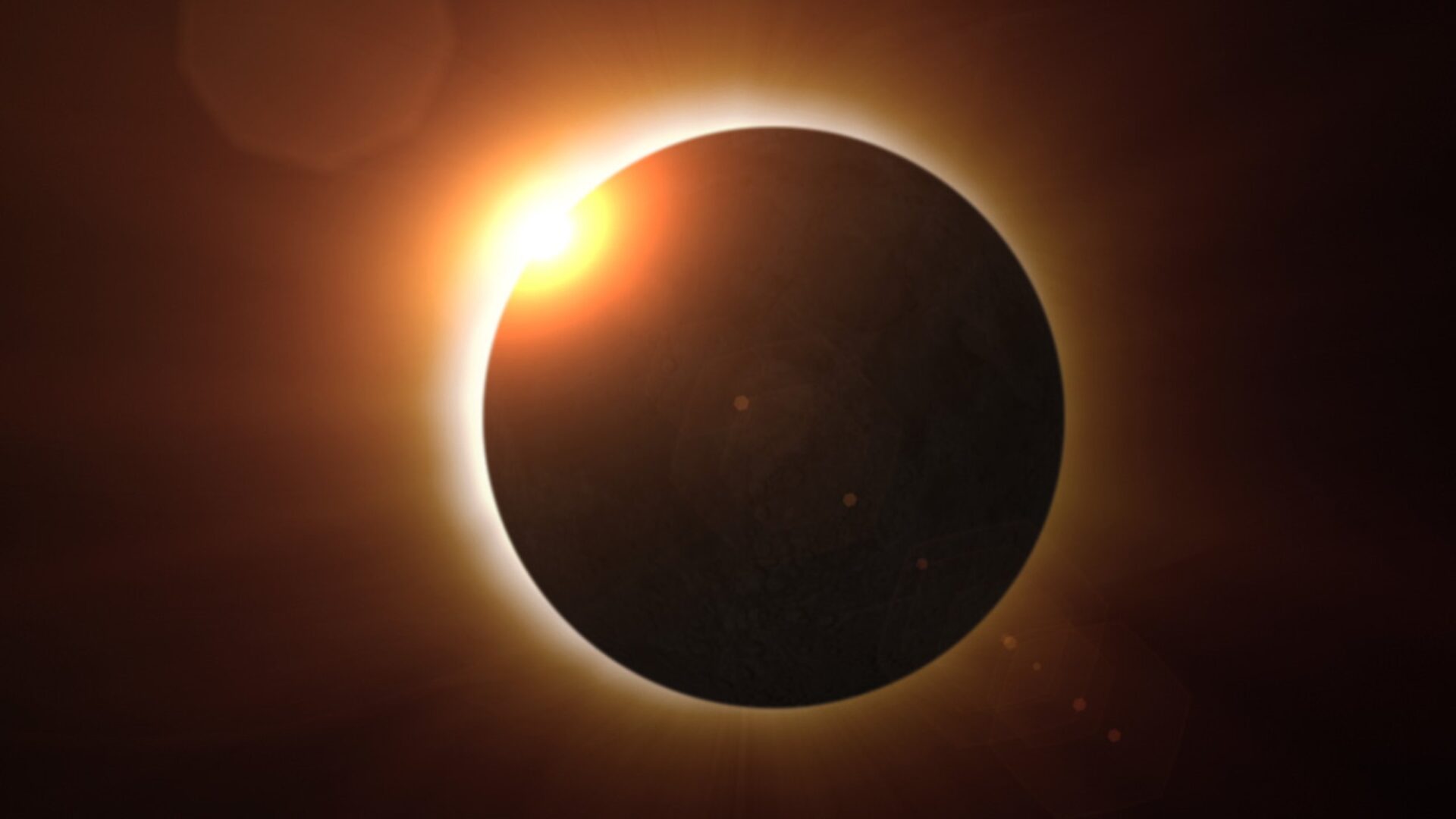
WASHINGTON – Social media platforms have been abuzz with claims of a solar eclipse today, August 2, 2025, supposedly plunging the world into “six minutes of complete darkness.” NASA, however, has swiftly debunked these claims, confirming no solar eclipse is scheduled for today.
The misinformation, which sparked excitement and confusion among skywatchers, highlights the power of viral rumors in the digital age. Here’s the truth about the “solar eclipse today” claim, the actual 2025 eclipse calendar, and what to expect for future celestial events.
No Solar Eclipse Today: NASA Sets the Record Straight
NASA, alongside reputable sources like timeanddate.com and Space.com, has confirmed that no solar eclipse is occurring on August 2, 2025. A viral claim, propagated by posts on X, suggested a total solar eclipse would cause six minutes of darkness worldwide, with some citing NASA as the source.
NASA’s official response, echoed by Hindustan Times and LatestLY, clarified that no such event is happening. “There is no solar eclipse scheduled for August 2, 2025,” NASA stated via its Science website, urging the public to rely on verified sources for astronomical events.
The rumor appears to have originated from misinterpretations of upcoming eclipse events or confusion with past eclipses, such as the annular solar eclipse on October 2, 2024, which featured a “ring of fire” visible in parts of South America. The claim of “six minutes of darkness” likely stems from the duration of totality in rare total solar eclipses, such as the August 12, 2026, event, which will offer up to 6.5 minutes of totality in parts of Europe.
The 2025 Eclipse Calendar: What Actually Happened
In 2025, Earth will experience two solar eclipses, both partial, and neither occurring on August 2. According to The Old Farmer’s Almanac and NASA, the eclipse schedule is as follows:
- March 29, 2025 – Partial Solar Eclipse: This eclipse was visible over parts of Europe, Asia, Africa, North America, South America, and the Atlantic and Arctic Oceans. It began at 4:50 a.m. EDT (0850 GMT) and reached its maximum at 6:47 a.m. EDT (1047 GMT), with the moon covering a portion of the sun’s disk. Astrophotographer Josh Dury captured stunning images at Stonehenge, despite some cloud cover, while observers in eastern Canada and the northeastern U.S. saw a dramatic crescent sun at sunrise.
- September 21, 2025 – Partial Solar Eclipse: The next solar eclipse will occur on September 21, 2025, visible over remote Southern Hemisphere regions, including New Zealand, Antarctica, and parts of the Pacific and Atlantic Oceans. This event will not produce totality or a “ring of fire,” as the moon will only partially obscure the sun. Exact timings depend on location, but it will occur during daylight hours in the affected regions.
Additionally, 2025 features two lunar eclipses: a total lunar eclipse on March 13-14, visible across much of the night side of Earth, and a partial lunar eclipse on September 7-8. Unlike solar eclipses, lunar eclipses are safe to view with the naked eye and occur during the full moon phase.
Why the Misinformation Spread
The “solar eclipse today” rumor gained traction due to several factors. First, the excitement surrounding recent eclipses, like the April 8, 2024, total solar eclipse that captivated millions across North America, has kept eclipses in the public consciousness. That event, visible from Mexico to Canada, drew eclipse chasers and inspired NASA’s Emmy-nominated coverage. Second, the allure of a “six-minute darkness” event tapped into the mystique of total solar eclipses, which can briefly turn day into night, as seen in the 2017 total eclipse.
Social media amplified the misinformation, with posts like @Sumeetmountain’s claiming a rare event and urging viewers to use solar glasses. The mention of NASA lent false credibility, as no official NASA statement supported the claim. Confusion may also stem from the upcoming total solar eclipse on August 12, 2026, which will cross the Arctic Ocean, Greenland, Iceland, and northern Spain, offering a spectacular 6.5-minute totality in some areas. Misinformation about this future event may have been misdated to August 2, 2025.
The Science of Solar Eclipses
A solar eclipse occurs when the moon passes between Earth and the sun, casting a shadow on Earth during the new moon phase. The moon’s orbit, tilted 5 degrees relative to Earth’s, means eclipses are rare, happening only during “eclipse seasons” every six months. There are four types of solar eclipses: total (the moon fully covers the sun), partial (the moon covers part of the sun), annular (a “ring of fire” appears when the moon is too far to fully cover the sun), and hybrid (a rare transition between total and annular). Total eclipses occur every 18 months on average but are visible in specific locations only once every 360-410 years.
Safety is critical when viewing solar eclipses. Looking directly at the sun during partial phases can cause permanent eye damage. NASA recommends using ISO 12312-2 certified eclipse glasses or indirect methods like pinhole projectors, except during the brief totality of a total eclipse when the sun’s disk is fully obscured.
Public Reaction and Fact-Checking Efforts
The viral claim sparked a mix of excitement and skepticism on X. @Sumeetmountain’s post, with over 1,000 reposts, fueled anticipation, while @latestly and @zoombangla countered with fact-checks, linking to NASA and other sources. @newsforsocial noted the absence of any eclipse today, urging users to verify information. The rumor’s spread reflects the public’s fascination with eclipses, amplified by cultural myths and modern superstitions, such as beliefs about eclipses harming pregnant women, per Royal Observatory Greenwich.
Eclipse chasers and amateur astronomers expressed frustration over the misinformation. On Reddit’s r/astronomy, users debunked the claim, pointing to NASA’s eclipse calendar. One user commented, “People are confusing 2025 with 2026. The next big eclipse is a year away in Europe.” The incident highlights the need for critical thinking in the face of viral astronomy claims.
Looking Ahead: The Next Solar Eclipse
The next solar eclipse, a partial event on September 21, 2025, will be visible in remote areas like New Zealand and Antarctica. For those planning to witness a total solar eclipse, the August 12, 2026, event is a must-see, with its path crossing densely populated regions like northern Spain and Iceland. NASA and timeanddate.com will offer livestreams for those unable to travel. The next total solar eclipse in the contiguous United States is not until August 23, 2044.
For safe viewing, NASA recommends preparing with certified eclipse glasses or solar filters. Eclipse chasers like Jamie Carter, editor of WhenIsTheNextEclipse.com, advise planning travel early for 2026, as destinations like Iceland are already booking up. Space.com offers guides for safe solar viewing and DIY pinhole projectors.
Conclusion
The “solar eclipse today” claim for August 2, 2025, is a false rumor debunked by NASA and astronomy experts. No solar eclipse is occurring today, with the next event scheduled for September 21, 2025, as a partial eclipse in the Southern Hemisphere.
The viral misinformation, spread through X posts, underscores the need for verified sources in astronomy news. As excitement builds for the 2026 total solar eclipse, skywatchers are encouraged to follow NASA, timeanddate.com, and Space.com for accurate updates and safe viewing tips. The awe of a solar eclipse remains a powerful draw, but today, the skies remain clear of celestial shadows.