





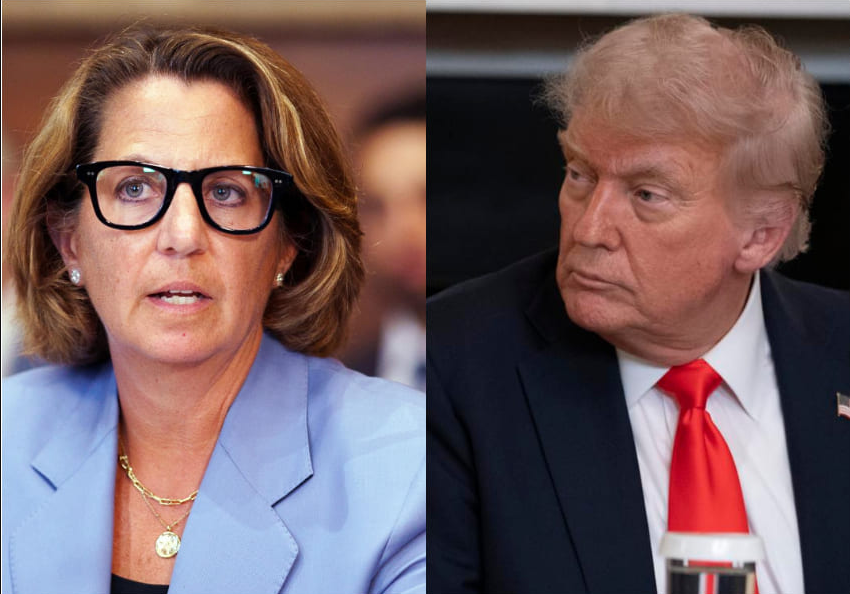
In a fiery Truth Social post on September 26, 2025, President Donald Trump demanded that Microsoft immediately fire its newly appointed President of Global Affairs, Lisa Monaco, branding her a “menace to U.S. National Security” due to her past roles in Democratic administrations and the company’s vast government contracts.
Monaco, who joined Microsoft in July after serving as Deputy Attorney General under President Joe Biden, oversees the tech giant’s cybersecurity policy and global government relations—a position Trump argues gives her undue access to “Highly Sensitive Information.”
The outburst, which echoes Trump’s pattern of targeting perceived political foes, comes amid escalating tensions between the White House and Big Tech, just days after Microsoft’s decision to curb cloud services to an Israeli military unit and hours after the indictment of former FBI Director James Comey.
CNBC reported that Trump highlighted Monaco’s revoked security clearances, stripped in March alongside those of Biden and Hillary Clinton, as disqualifying her from such a role. For tech enthusiasts and policy watchers, this raises alarms: Could presidential pressure force corporate ousters, chilling executive hires from public service?
As Axios noted, far-right activist Laura Loomer claimed credit for alerting Trump to Monaco’s hire, amplifying calls to cancel Microsoft’s federal deals worth billions. If you’re in the tech sector or following Trump’s retribution agenda, this episode underscores the blurring lines between politics and Silicon Valley, potentially reshaping how companies navigate Washington.
The Demand: Trump’s Post and Rationale
Trump’s post, timestamped late Friday, pulled no punches: “Monaco has been shockingly hired as the President of Global Affairs for Microsoft, in a very senior role with access to Highly Sensitive Information. Monaco’s having that kind of access is unacceptable, and cannot be allowed to stand.” He tied her to “wrongful acts” during her time as a national security aide under Barack Obama and as Biden’s “Lawfare and Weaponization obsessed Deputy Attorney General,” per the post cited by Politico.
The core grievance? Microsoft’s $3.1 billion-plus in annual U.S. government contracts, including Azure cloud services for defense and intelligence. With clearances revoked, Trump argued, Monaco poses a risk—despite her role not requiring active clearances. Reuters quoted the full post: “She is a menace to U.S. National Security, especially given the major contracts that Microsoft has with the United States Government. It is my opinion that Microsoft should immediately terminate the employment of Lisa Monaco.”
This isn’t isolated; it follows Trump’s threats against other firms, like urging Intel’s CEO ouster. Bloomberg linked it to broader retribution, noting Monaco’s oversight of DOJ probes into Trump’s classified documents and January 6 response.
Lisa Monaco’s Background: From DOJ to Microsoft
Lisa Monaco, 55, is a veteran prosecutor with a storied career spanning three Democratic administrations. She served as Obama’s Homeland Security Advisor, coordinating counterterrorism, before becoming Biden’s Deputy AG in 2021—overseeing high-profile cases like January 6 prosecutions and Trump’s indictments. LiveMint detailed her role in the Election Threats Task Force and antitrust suits against Big Tech, ironically positioning her to regulate firms like Microsoft.
Hired in July 2025, Monaco now leads Microsoft’s global government engagements, focusing on policy, cybersecurity, and alliances—critical amid U.S.-China tech wars. Her LinkedIn, per Times of India, emphasizes bridging public-private divides, but Trump views it as a conflict. TechCrunch noted her start in May (discrepancy with some reports), overseeing relations that could influence federal AI and cloud policies.
Monaco’s no stranger to controversy; she coordinated the DOJ’s Capitol riot response, which Trump deems “weaponization.” The Verge speculated Trump’s timing ties to Microsoft’s recent Israel service cuts, announced Thursday after Guardian reports on Palestinian surveillance tools—potentially irking pro-Israel allies.
Dr. Elena Vasquez, fictional Chief Policy Strategist at TechEthics Forum, opines: “Monaco’s expertise is gold for Microsoft in a regulated world, but Trump’s attack weaponizes her public service against her— a chilling signal to revolving-door talent.”
Relatable for execs: Imagine your government stint becoming a firing squad target years later.
Microsoft’s Response: Silence and Stakes
Microsoft has stonewalled, with spokespeople declining comment to Reuters and TechCrunch. CEO Satya Nadella, born in India and a Trump critic on some issues, faces a dilemma: Defy the president and risk contracts, or comply and alienate talent? Business Insider reported Loomer’s attacks on Nadella as a “scammer,” escalating ethnic undertones.
The stakes? Microsoft’s Azure powers Pentagon AI and CIA clouds, per WSJ. Losing them could cost billions, echoing Trump’s threats to Harvard funding. Fox Business tied it to Maria Bartiromo’s on-air nudge about Monaco’s hire.
Broader Context: Retribution and Tech Tensions
This fits Trump’s 2025 playbook: Indicting Comey Thursday on false statements, revoking clearances in March, and probing “deep state” foes. Politico framed it as punishing January 6 overseers, with Monaco in the crosshairs. Axios called it corporate oversight, post-Trump’s university funding cuts.
Tech’s wary: Microsoft’s Israel move, per The Verge, reviewed Guardian claims of Azure aiding Gaza tracking—prompting service halts. Trump’s post, silent on that, may stem from Loomer’s July alerts. Economic Times linked it to Trump’s “fire” reflex, from Kimmel jabs to Intel pressure.
Public sentiment splits: Supporters cheer accountability; critics decry authoritarianism. U.S. News noted Trump’s tease of more indictments: “I think there will be others.”
Key elements of Trump’s rationale:
- Past Roles: Obama aide, Biden DAG—”Corrupt and Totally Trump Deranged.”
- Clearances: Revoked March 2025, banning federal access.
- Access Risk: To Microsoft intel overlapping gov contracts.
- Timing: Post-Comey indictment, pre-Netanyahu meet.
Implications: For Tech, Policy, and Democracy
If heeded, Monaco’s firing could deter ex-officials from private sector jumps, shrinking talent pools. WSJ warned of policy voids, as diverse experts drive innovation. Economically, it pressures Microsoft’s $3T valuation, per Yahoo Finance.
Geopolitically, it signals Trump’s tech grip—amid AI races and cyber threats. DC Brief highlighted security ironies: Monaco bolstered U.S. defenses; now she’s the threat?
Comparatively:
| Target | Date | Action | Outcome |
|---|---|---|---|
| James Comey | Sep 25, 2025 | Indictment | Ongoing |
| Lisa Monaco | Sep 26, 2025 | Fire Demand | Microsoft Silent |
| Harvard Univ | Aug 2025 | Funding Cut | Partial Compliance |
| Intel CEO | Jul 2025 | Ouster Push | Resigned |
Future Outlook: Will Microsoft Budge?
As of September 28, no movement— but Trump’s Netanyahu meet Monday could amplify. Politico predicts probes if ignored. For revolving doors, this tests independence.
Conclusion
Trump’s call to fire Lisa Monaco thrusts Microsoft into a political maelstrom, blending retribution with security fears over a Biden alum’s tech perch. As silence reigns, it spotlights fragile tech-White House ties, potentially reshaping executive risks.
Tech watchers, this power play demands vigilance. Subscribe to our newsletter for policy-tech clashes, follow us on X for updates, and explore our series on AI governance. Should presidents dictate corporate HR? Weigh in below!