



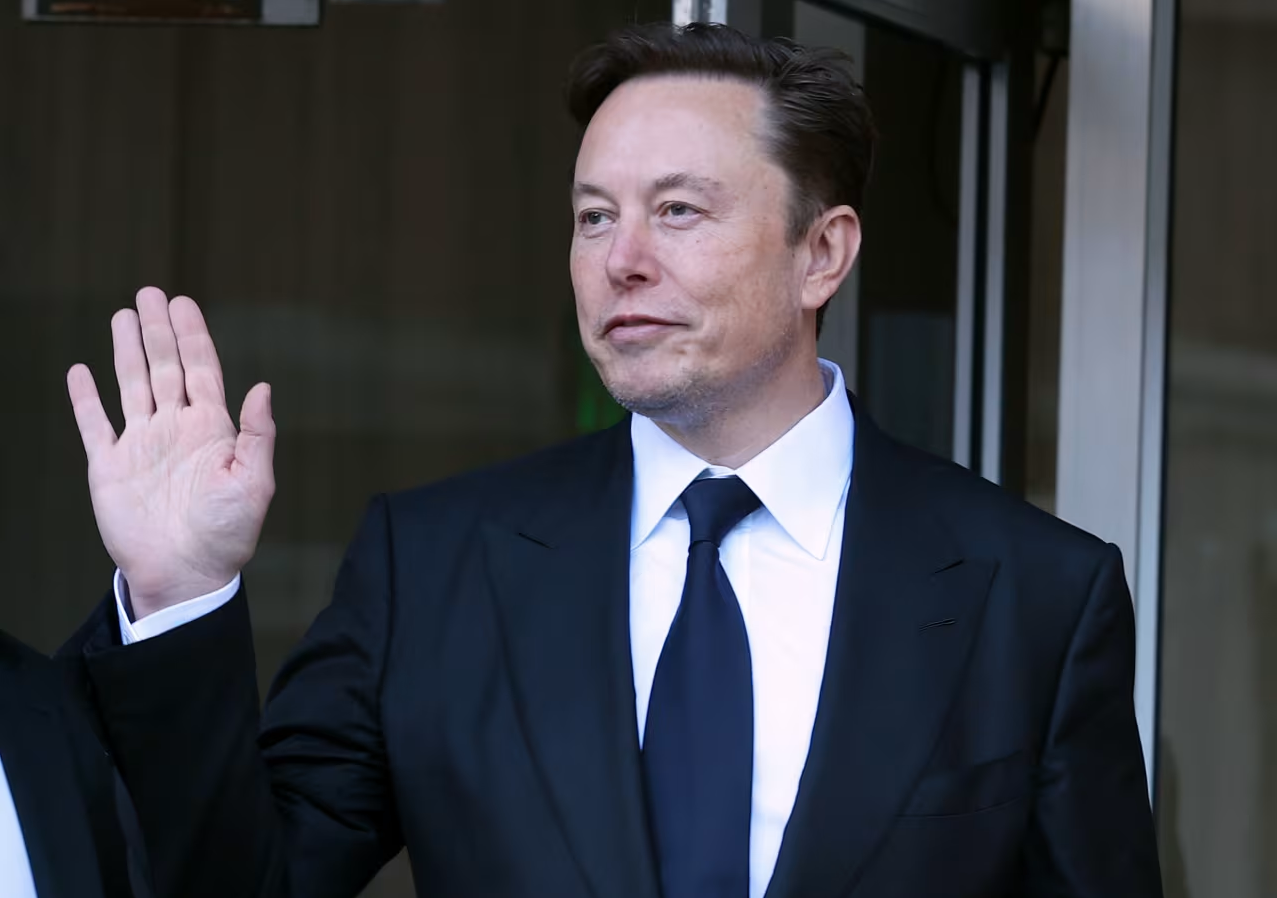
(TechGenez) — In one of the most consequential legal battles in the history of artificial intelligence, Elon Musk, the world’s richest man and CEO of Tesla and SpaceX, took the witness stand Tuesday in a federal courthouse in Oakland, California, as the second day of his high-stakes civil trial against OpenAI CEO Sam Altman and President Greg Brockman got underway.
Musk was the first witness called to testify, appearing calm and composed as his lead trial attorney, Steven Molo, guided him through an examination of his background, entrepreneurial history, and the events leading to the founding of OpenAI.
The Case at the Centre
Musk filed the lawsuit against Altman, Brockman, and Microsoft — named as a co-defendant — in 2024, claiming that OpenAI betrayed its founding mission as a nonprofit designed to develop safe, open-source artificial intelligence for the public good.
The suit accuses Altman and Brockman of double-crossing Musk by steering the company away from its original mission. Musk is seeking damages, funding for OpenAI’s charitable arm, and Altman’s removal from OpenAI’s board.
Microsoft is also named as a defendant. Musk’s attorneys argue that Microsoft enabled OpenAI’s alleged breach of charitable trust through its investments and partnerships with the company’s for-profit subsidiary.
OpenAI has dismissed the lawsuit as an unfounded campaign driven by competitive jealousy. In an opening statement, OpenAI’s lead attorney William Savitt told jurors pointedly: “We are here because Mr. Musk didn’t get his way with OpenAI.” Savitt further alleged that Musk used promises of funding to bully OpenAI’s founding members and attempted to take control of the company and merge it with Tesla — and that, in fact, Musk wanted to form a for-profit company in which he would own more than 50%.
“I Came Up With the Idea”
On the stand, Musk was unequivocal about his role in OpenAI’s origins. Displaying the company’s 2015 founding charter on a courtroom monitor — which declared OpenAI would pursue “open source technology for the public benefit” and was “not organized for the private gain of any person” — Musk testified: “I came up with the idea, the name, recruited the key people, taught them everything I know, provided all the initial funding.”
He maintained that the nonprofit structure was a deliberate and principled choice. “It was specifically meant to be for a charity that did not benefit any individual person,” he said. “I could have started it as a for-profit and I chose not to. I chose to make it something for the benefit of all humanity.”
Musk’s attorney Molo contended that without Musk, “there would be no OpenAI, pure and simple,” and that Musk contributed approximately $38 million to the nonprofit over roughly five years.
On AI: “It Could Kill Us All”
Perhaps the most striking moments of the day came when Musk offered his sweeping and candid views on the future of artificial intelligence — testimony that underscored why he says the stakes of this trial extend far beyond a corporate dispute.
“It could make us more prosperous, but it could also kill us all,” Musk told the court. Drawing on pop culture to illustrate his point, he said: “We want to be in a Gene Roddenberry movie, like Star Trek, not so much a James Cameron movie, like Terminator.”
Musk likened the development of AI to raising children: “It’s like if you had a very smart child… at the end of the day when the child grows up, you can’t really control that child, but you can try to instill the right values — honesty, integrity, caring about humanity.”
He also made a bold prediction: “My guess is that AI will probably be as smart as any human as soon as next year.”
AI Safety as a Career-Long Mission
Musk’s attorneys used much of the day’s testimony to establish his long-standing commitment to safe AI development. Describing the goal behind his brain-computer interface company Neuralink, Musk said its long-term purpose was “actually AI safety, in the sense that if we can closely tie the human world to AI — basically if we’re going to achieve better human-AI symbiosis — then we’re more likely to have a future with AI that is good for humanity.”
The line of questioning appeared designed to frame Musk not merely as a litigant nursing a grudge, but as a principled figure whose concerns about AI governance predate and transcend the current lawsuit.
Duelling Narratives in the Courtroom
The competing visions of who Musk is — and what truly motivates this lawsuit — were on vivid display throughout the day.
OpenAI’s Savitt argued that Musk’s true interest in the suit is not OpenAI’s nonprofit status, but rather his own competitive position in the AI industry. “What he cares about is Elon Musk being at the top,” Savitt told jurors.
Musk’s attorney Molo countered that by 2022, OpenAI’s deepening relationship with Microsoft had become a “gamechanger” that violated every commitment OpenAI made — not just to Musk, but to the world — transforming the company from an open-source mission into a for-profit venture with Microsoft controlling much of its intellectual property through licensing.
In a 2023 email submitted as an exhibit, Altman told Musk he was his “hero” but expressed hurt over Musk’s attacks on OpenAI. Musk’s reply: “I hear you and it is certainly not my intention to be hurtful, for which I apologize, but the fate of civilization is at stake.”
What Comes Next
Testimony concluded for Tuesday with Musk set to return to the stand Wednesday to complete his examination. His lawyers announced that Jared Birchall — who manages Musk’s finances through his family office, Excession LLC, and serves as an executive at both xAI and Neuralink — will be called as the next witness thereafter.
Altman is also expected to testify during the trial, alongside Brockman, Microsoft CEO Satya Nadella, and several key researchers involved in OpenAI’s founding. The trial is expected to last approximately three weeks.
OpenAI is currently valued at $852 billion. The outcome of this case could have profound consequences — not only for the two men at the center of it, but for the governance, structure, and direction of artificial intelligence development globally.
Reporting contributed from the federal courthouse in Oakland, California.