



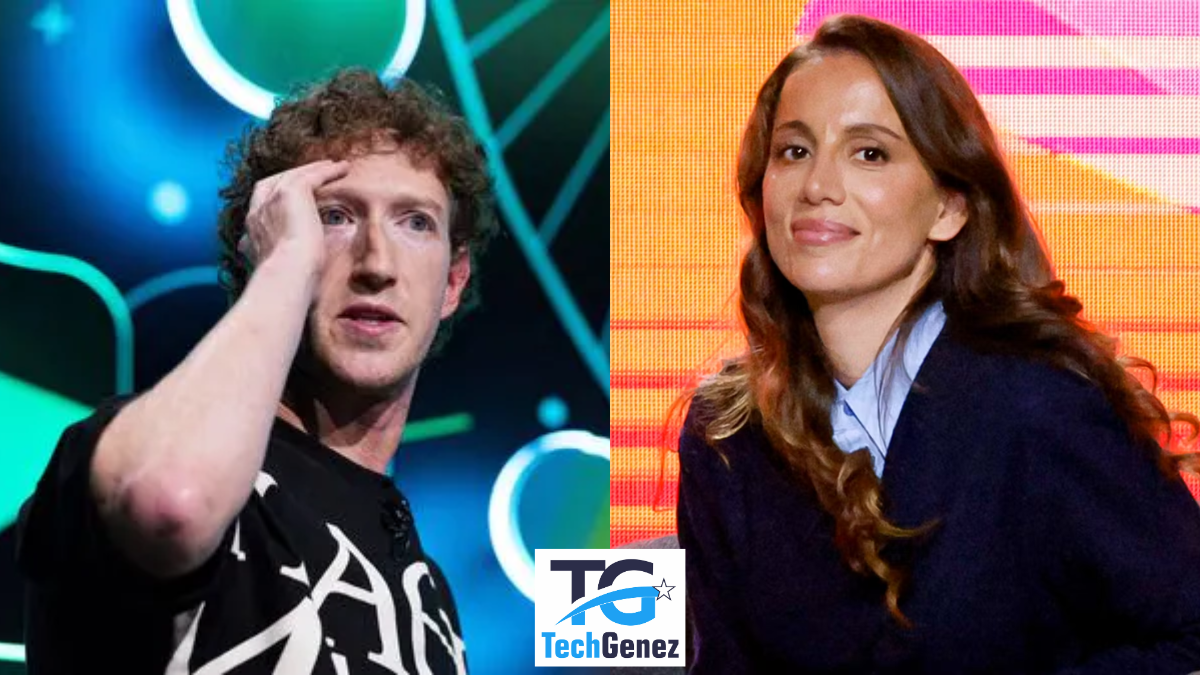
SAN FRANCISCO – In a bold move that has sent shockwaves through Silicon Valley, Mira Murati, the former OpenAI CTO and founder of Thinking Machines Lab (TML), turned down a staggering $1 billion job offer from Meta CEO Mark Zuckerberg to join his newly launched Superintelligence Labs.
The offer, part of an aggressive campaign to poach top AI talent, was one of several extended to TML researchers, with packages ranging from $200 million to $1 billion over multiple years. Despite the unprecedented sums, Murati and her entire 50-person team rejected Meta’s advances, prioritizing their independent mission to advance artificial general intelligence (AGI) over corporate wealth.
This high-profile rebuff, reported by WIRED and other outlets, highlights Murati’s growing influence and underscores Meta’s challenges in the intensifying AI talent war. Here’s the full story behind Murati’s rejection, its context, and its implications for the future of AI.
The Billion-Dollar Offer: Zuckerberg’s Bold Play
Mark Zuckerberg, known for his audacious acquisitions like Instagram ($1 billion in 2012) and WhatsApp ($19 billion in 2014), has turned his attention to AI talent as Meta seeks to compete with OpenAI, Google, and Anthropic. In July 2025, Meta launched Superintelligence Labs, a division aimed at building “personal superintelligence” to enhance productivity across its platforms—Facebook, Instagram, and WhatsApp.
To fuel this vision, Zuckerberg personally spearheaded a recruitment blitz, offering eye-watering compensation packages to top researchers. According to WIRED, more than a dozen TML staffers received offers, with one researcher—Mira Murati herself—offered over $1 billion over several years, including up to $100 million in the first year and significant equity vesting immediately.
These offers dwarf typical tech executive pay. For context, Meta’s own CEO compensation for Zuckerberg was $24.4 million in 2024, while Microsoft’s Satya Nadella earned $79.1 million, per The New York Times. Meta’s strategy reflects a sports-like approach, betting that elite AI talent can drive exponential revenue growth, potentially justifying billions in spending for a company with a $1.7 trillion market cap.
Zuckerberg’s direct outreach, via personalized messages and promises of “endless access to cutting-edge chips,” per Fortune, underscores his determination to position Meta as an AI leader. Yet, Murati’s rejection signals that money alone may not secure the industry’s brightest minds.
Mira Murati and Thinking Machines Lab: A Mission-Driven Powerhouse
Mira Murati, a 36-year-old Albanian-born engineer, has become a central figure in AI’s evolution. As OpenAI’s CTO from 2018 to 2024, she led the development of ChatGPT and DALL-E, cementing her reputation as a visionary in generative AI. In late 2024, Murati founded Thinking Machines Lab in San Francisco, raising a record-breaking $12 billion in seed funding, one of the largest in startup history, per Bloomberg.
TML’s 50-person team, including former OpenAI researchers like Brad Lightcap and Jason Kwon, focuses on advancing AI reasoning models to achieve AGI that “benefits humanity.” Murati’s leadership and TML’s mission-driven culture have made it a magnet for talent and a prime target for Meta’s recruitment efforts.
Murati’s rejection of Zuckerberg’s offer was unequivocal. In a statement to WIRED, she said, “So far at Thinking Machines Lab, not a single person has taken the offer. Our team is committed to our mission of advancing AI for the greater good, and we believe we can achieve that best as an independent entity.”
Sources cited by The Times of India suggest TML researchers value their autonomy, flexible work environment, and ability to shape AI’s future without corporate constraints. Murati’s decision echoes Zuckerberg’s own rejection of Yahoo’s $1 billion offer for Facebook in 2006, a move that led to Meta’s current dominance, per Inc..
Why Murati and TML Said No
Several factors drove Murati’s team to reject Meta’s offers:
- Mission Over Money: TML’s focus on AGI for humanity aligns with OpenAI’s original ethos, which Murati helped shape. Researchers see Meta’s commercial priorities—integrating AI into social media platforms—as less impactful than TML’s independent vision, per The New York Times.
- Skepticism of Meta’s AI Strategy: Meta’s AI efforts, including its Llama 4 model, have faced scrutiny. In April 2025, AI scholars accused Meta of fudging Llama 4’s benchmark results by training on test sets, per AS USA. This, combined with Meta’s “relative lack of experience” in frontier AI, per Futurism, has made researchers wary of joining a company playing catch-up to OpenAI and Google.
- Cultural and Leadership Concerns: Zuckerberg’s leadership style and Meta’s history of privacy scandals, including a 2023 mental health lawsuit over teen well-being, per Wikipedia, may deter talent. TML’s collaborative, startup-like culture contrasts with Meta’s corporate structure, which some researchers view as stifling, per WIRED.
- Financial Independence: TML’s $12 billion valuation provides ample resources, reducing the allure of Meta’s offers. Researchers like Matt Deitke, who turned down $250 million, see greater upside in TML’s potential to become a unicorn, per The New York Times.
The AI Talent War: Researchers Hold the Power
The rejection reflects a broader shift in the AI industry, where top researchers command unprecedented leverage. The New York Times likened AI talent to NBA stars, with individuals like Murati negotiating deals that rival corporate acquisitions. Meta has had some success, poaching seven OpenAI researchers, including Jason Wei and Hyung Won Chung, and Google DeepMind’s Jack Rae for Superintelligence Labs, per Bloomberg. However, the TML snub highlights Meta’s challenges. OpenAI’s Mark Chen noted that while Meta’s offers are unmatched financially, researchers prioritize mission-driven environments, per The New York Times.
The talent war is intensifying as AI investment soars. Meta’s $72 billion AI budget for 2025, including $15 billion for a 49% stake in Scale AI, dwarfs competitors’ spending, per Fortune. Yet, sustainable business models remain elusive, with Futurism warning of a dot-com-style bubble. Startups like TML and Anthropic are drawing talent with promises of autonomy, while Europe’s Mistral leverages anti-U.S. sentiment to build a regional AI ecosystem, per Fortune. Murati’s rejection positions her as a leader in this dynamic, with TML’s valuation and independence making it a formidable player.
Industry and Public Reactions
Industry analysts see the rejection as a blow to Meta. Bloomberg noted that while Meta’s momentum in hiring some scientists is promising, failures like TML’s rebuff highlight brand challenges. New York Magazine criticized Meta’s AI efforts as a “mess,” citing half-baked features and slopified platforms. Meanwhile, Murati’s stand has elevated her status, with The Times of India calling her “the face of AI’s independent future.”
Meta’s Superintelligence Labs: A Shaky Start
Meta’s Superintelligence Labs, co-led by Scale AI’s Alexandr Wang and former Google researcher Ruoming Pang, aims to build AI assistants that rival OpenAI’s ChatGPT and Google’s Gemini. Zuckerberg’s vision, outlined in a July 30, 2025, video, emphasizes “personal superintelligence” for productivity and creativity, per The Telegraph.
However, the Labs face skepticism. Wang’s lack of AI research experience, per AS USA, and Meta’s reliance on open-source models like Llama 4, which lag behind proprietary systems, have raised doubts. The company’s $80 billion capital expenditure, including 18,000 Nvidia GPUs, underscores its ambition but also its financial risk, per Fortune.
The TML rejection complicates Meta’s plans. While hires like Wang and Rae bolster the Labs, the failure to attract Murati—a proven leader in generative AI—limits Meta’s ability to compete at the frontier. Investor concerns about rising costs, with compensation expenses set to surge in 2026, per The Telegraph, add pressure. Meta’s stock, up 10% after $47.5 billion in Q2 revenue, remains volatile amid these challenges.
Implications for the AI Industry
Murati’s rejection signals that mission, autonomy, and trust are as critical as compensation in the AI talent war. TML’s $12 billion valuation and independence position it as a rival to OpenAI and Anthropic, potentially attracting more talent and investment. For Meta, the snub exposes vulnerabilities in its AI strategy, particularly its reliance on external talent to close the gap with competitors. The incident also echoes Zuckerberg’s own history of rejecting Yahoo’s $1 billion offer for Facebook, a decision that led to Meta’s dominance, per Moneywise.
The broader AI industry faces a reckoning. With hundreds of billions invested, economists warn of a bubble, per Futurism. Meta’s aggressive spending may yield breakthroughs, but its credibility issues and corporate baggage could hinder progress. Meanwhile, startups like TML are reshaping the landscape, offering researchers a path outside Big Tech. Murati’s leadership, rooted in her OpenAI legacy, positions her as a key figure in defining AI’s future.
Future Outlook
Meta is unlikely to halt its recruitment drive, with Zuckerberg promising more high-profile hires and advanced chip access, per WIRED. The company may refine its pitch, emphasizing open-source AI and its 3 billion-user ecosystem. TML, bolstered by its $12 billion war chest, is poised for growth, with rumors of an upcoming reasoning model, per Bloomberg. Murati’s rejection may inspire other researchers to prioritize mission over money, reshaping the talent landscape.
As the AI war escalates, Meta, OpenAI, and Google will compete fiercely for talent, while startups like TML carve out independent paths. The rejection of Zuckerberg’s $1 billion offer by Mira Murati is not just a personal stand but a defining moment, signaling that the future of AI may lie beyond the grasp of tech giants.