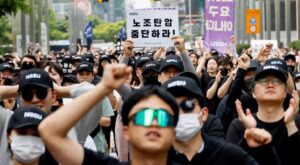



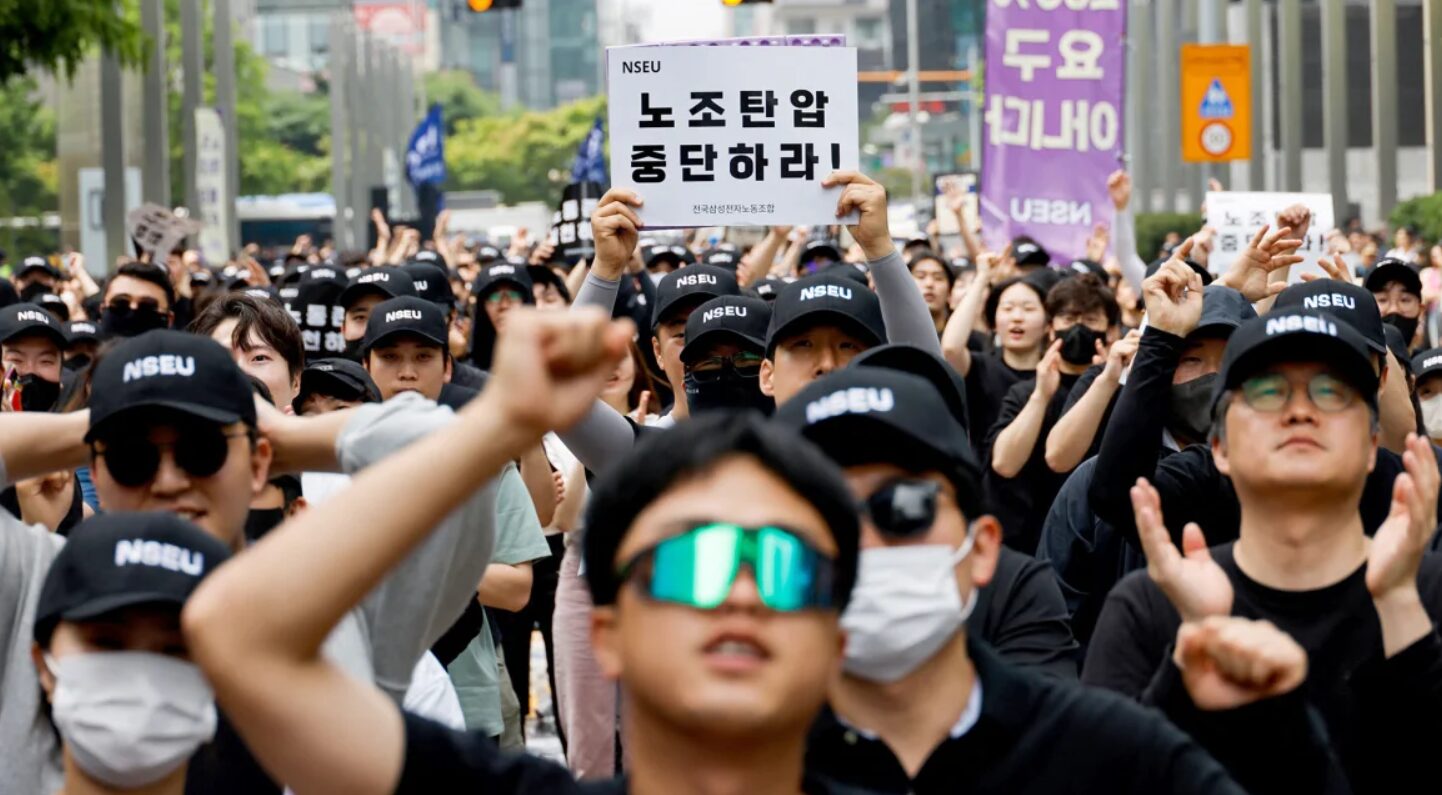
SEOUL (TechGenez) – More than 45,000 workers at Samsung Electronics are preparing for what could be the largest strike in the company’s history, with an 18-day walkout scheduled to begin on May 21 unless last-minute negotiations yield a breakthrough on bonus payouts.
The labor dispute centers on how profits from the global artificial intelligence boom should be shared, as Samsung’s memory chip business, a critical component in AI data centers, smartphones, and laptops, has seen surging demand and record revenues.
The strike threat has triggered alarm within the South Korean government, rattled foreign investors, and raised concerns about potential disruptions to global semiconductor supply chains.
Labor Minister’s Intervention
Labor Minister Kim Young-hoon met Friday with Choi Seung-ho, chairman of Samsung Electronics’ largest labor union, in a last-ditch effort to prevent the walkout. The meeting took place at the union office on Samsung’s Pyeongtaek campus in Gyeonggi Province.
Kim also facilitated talks between union leaders and senior executives from Samsung’s Device Solutions division, including Vice Chairman Jun Young-hyun. However, the discussions ended without a clear resolution.
The union has demanded that Samsung replace its chief negotiator and make a substantive shift in its position on bonuses before returning to the table. Union officials said the minister showed understanding of their concerns and pledged to convey them to management.
Union Demands and Company Position
Workers argue they deserve a larger share of the windfall profits generated by the AI-driven surge in demand for high-bandwidth memory chips. Samsung has been one of the biggest beneficiaries of the global AI boom, with its memory division reporting strong growth in 2025 and early 2026.
The union is pushing for improved bonus structures tied to the company’s exceptional performance in the AI sector. This would mark only the second strike in Samsung Electronics’ history.
Samsung has not publicly detailed its latest offer, but sources close to the negotiations say the company is concerned that significant concessions could set a precedent for future wage and bonus disputes across its vast operations.
Broader Context
Samsung Electronics is the world’s largest manufacturer of memory chips, supplying DRAM and NAND flash used in AI servers, consumer electronics, and data centers. Any prolonged production stoppage could exacerbate global chip shortages and affect major tech companies reliant on Samsung’s components.
The dispute highlights growing tensions in South Korea’s labor market, where workers at major conglomerates are increasingly demanding a greater share of record corporate profits amid rising living costs and economic inequality.
Challenges
- A full-scale strike could disrupt memory chip production at key facilities, potentially impacting global supply chains for AI infrastructure and consumer devices.
- The South Korean government faces pressure to mediate effectively without appearing to favor either side, given Samsung’s critical role in the national economy.
- Foreign investors have expressed concern that prolonged labor unrest could damage Samsung’s reputation as a reliable supplier.
Conclusion
The looming strike at Samsung Electronics underscores the complex balance between corporate profits from the AI surge and worker demands for fair compensation. As one of the world’s most important semiconductor manufacturers, any disruption at Samsung could have ripple effects across global technology supply chains, making a negotiated settlement critical for both the company and the broader industry.